
Plus starts development with Teledyne FLIR to test thermal cameras for autonomous trucks
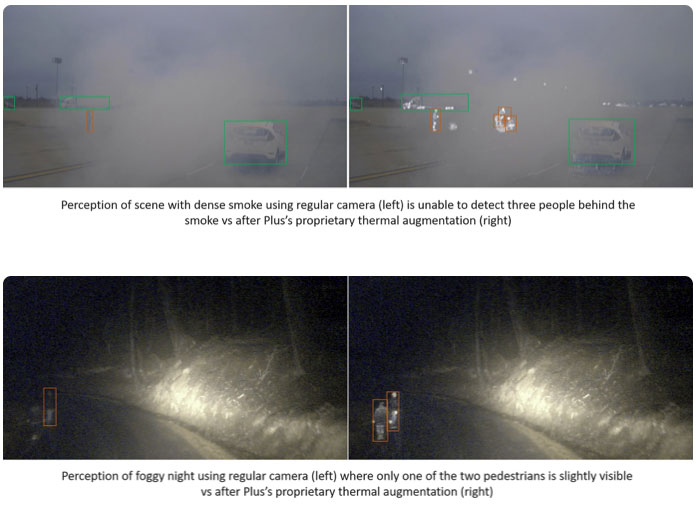
Sep 08, 2021Plus announced that it will collaborate with Teledyne FLIR, LLC on a development project to explore the addition of thermal cameras to the sensor stack used with Plus’s Level 4 autonomous driving technology.
“You can never be too safe when it comes to equipment you put on a heavy truck. Combining thermal cameras with our other sensors would bring an additional margin of safety to our system. Our research pilot will not only assess the technical performance but also consider cost and scale requirements in order to potentially add this to our product roadmap,” said Tim Daly, Chief Architect of Plus.
“We are excited to be working with the team at Plus as they explore the integration of thermal cameras into their current sensor suite, creating even safer autonomous commercial vehicles,” said Paul Clayton, General Manager of Components, Industrial Technologies Segment at Teledyne FLIR. “By combining thermal imaging with visible light cameras, lidar, and radar, Plus can create more comprehensive and redundant systems, allowing these vehicles to more readily detect and classify objects and humans on the road to help save lives.”
Similar Stories

Mintra launches online training to help organizations prepare for EU AI Act
View Article
Source Logistics warns supply chain industry about rising data-wiping cyberattacks, outlines layered defense strategy
View Article
BusinessCode sees the future of logistics in digital service models
View ArticleIndependent JBF Consulting analysis highlights how ORTEC is helping organizations with transportation fleets
New report identifies three innovations advancing more adaptive, resilient transportation planning
View Article
Cleo takes aim at the supply chain risks no one sees
View Article
CrownX | Driver app wins business for air freight trucking firms
View ArticleGet the most up-to-date trending news!
SubscribeIndustry updates and weekly newsletter direct to your inbox!
Follow us on social media:


