
U.S. refinery runs remain lower than the five-year range
Nov 09, 2020Since April, when responses to the 2019 novel coronavirus disease (COVID-19) reduced demand for refined products such as gasoline, distillate fuel, and jet fuel, gross inputs of crude oil and other raw materials to U.S. refineries (refinery runs) have been lower than the five-year range (2015–19). Although runs have increased compared with their April lows, the continued effects of the pandemic, in addition to seasonal factors, have resulted in continued lower refinery runs. As of October 30, U.S. refinery runs were 14.0 million barrels per day (b/d), or about 13% lower than the average for this time of year, according to the U.S. Energy Information Administration’s (EIA) Weekly Petroleum Status Report.
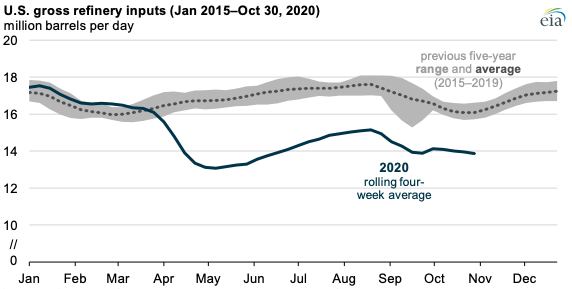
In April, substantial declines in U.S. domestic demand for petroleum fuels resulted in a significant reduction in U.S. refinery operations. Beginning in June, some refiners began increasing their refinery runs in response to gradual increases in demand, particularly for gasoline. By the week ending August 21, gross inputs to refineries reached 15.3 million b/d, the highest level since April.
U.S. refinery runs typically reach their annual high point in mid-to-late August. After that, some refineries undergo seasonal maintenance while gasoline demand begins to decrease, resulting in reduced runs. In 2020, refinery runs decreased from their mid-August high of 15.3 million b/d to nearly 14.0 million b/d by mid-September and generally remained near that level for the rest of September and throughout October.
The Gulf Coast is the largest refining region in the country and has been affected by a particularly active storm season this year. The Gulf Coast region is the source of most U.S. petroleum exports and is more likely to be affected by less global demand for petroleum fuels.
East Coast refiners have experienced the largest decline in runs from the five-year average in percentage terms. EIA attributes much of the change in East Coast refining to the closure of Philadelphia Energy Solutions in June 2019, the region’s largest refinery.
The Midwest is the only U.S. region where refinery runs have been higher than the previous five-year average since April. Refinery runs in the Midwest likely increased because of greater agriculture sector demand from this fall’s harvest.
More information on U.S. refining markets is available in EIA’s This Week in Petroleum.
Principal contributor: Kevin Hack
Similar Stories

U.S. refinery capacity has dropped from 2025 to 2026
View Article
Svanehoj to supply LTD gauging systems for an LNGC-to-FSU conversion
View Article
TGP appoints Igor Muñiz as Chief Strategy Officer
View ArticleNord Gas Solutions’ LNG regasification system selected for Exmar FSRU conversion
Nord Gas Solutions will supply an LNG regasification system module for Belgium based Exmar.
View Article
Flux Power releases SkyEMS® 3.0, transforming fleet data with AI-powered insights and personalized dashboards
View ArticleGlobal demand for LNG expected to grow by 65% by 2050
Global demand for liquefied natural gas (LNG) is expected to increase to nearly 700 million tons a year by 2050, an increase of around 65% from 2025 levels1, according to…
View ArticleGet the most up-to-date trending news!
SubscribeIndustry updates and weekly newsletter direct to your inbox!
Follow us on social media:


