
U.S. electricity generation from natural gas was highest on record this past winter
Jun 07, 2023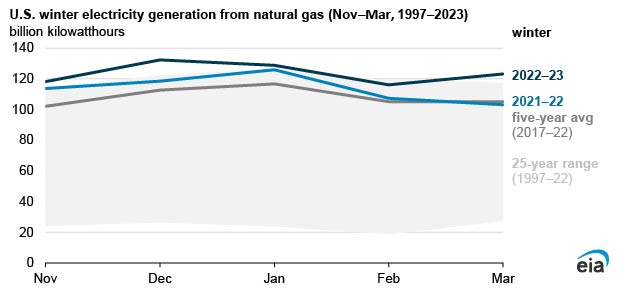
According to our Short-Term Energy Outlook (STEO), U.S. electricity generation from natural gas reached a record-high 619 billion kilowatthours (BkWh) during the most recent winter heating season (November 1–March 31), averaging more than 120 BkWh per month and accounting for 38% of the country’s electricity generation mix. Electricity generation from natural gas increased in the United States this past winter due to increased demand for electricity and continued reductions in electricity generation from coal.
U.S. electricity generation from natural gas peaks in the summer when demand for electricity is greatest—largely driven by demand for air conditioning. A smaller peak occurs during the winter, when homes and businesses in some areas of the country use heat pumps, electric radiators, space heaters, and other electric-heating equipment to heat buildings.
Overall, U.S. electricity generation this past winter was the highest since we began collecting this data in 1997. The increased electricity demand was met by natural gas, wind, and solar—all of which increased their overall electricity generation compared with the previous winter of 2021–22. In contrast, electricity generation from coal decreased compared with the previous winter.
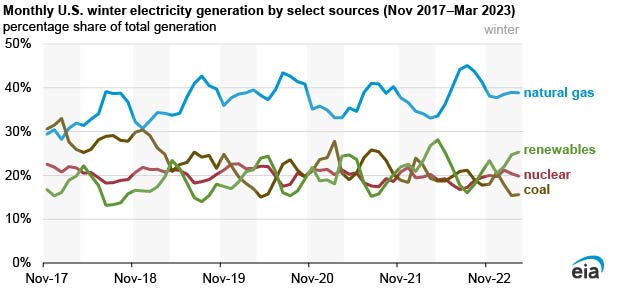
Natural gas-fired power plants are relatively flexible to operate because they can ramp electricity generation up or down relatively quickly to meet demand fluctuations. Coal-fired electricity declined throughout 2022 and into 2023 because of a long-term trend of coal capacity retirements as well as increased competition from natural gas-fired combined-cycle power plants when natural gas prices are low. As a result, the natural gas-fired share of the U.S. electricity generation mix increased from 35% in winter 2021–22 to 38% last winter. During the same period, coal’s generation share fell from 21% to 18%.
Renewables’ share of electricity generation also increased to help meet overall electricity demand. In 2022, 8 gigawatts (GW) of new wind capacity additions and 10 GW of new solar capacity additions came online, according to our Electric Power Monthly.
Similar Stories

Metered electricity demand in the New York ISO falls midday because of small-scale solar
View Article
U.S. commercial crude oil inventories have decreased in June
View Article
Fuel cell investment by data centers set to grow tenfold, reaching $30 billion by 2030
View Article
Two monopile handling innovations boost Baltic Power offshore wind farm
View ArticleThe Danish Maritime and Commercial High Court rules in favor of Ørsted in cases concerning the former Elsam
Today, the Danish Maritime and Commercial High Court has delivered its judgement in favour of Ørsted in six cases, where the plaintiffs have claimed damages totalling up to DKK 416…
View Article
Middle East oil supply predicted to recover by end of ‘26, faster than expected – Rystad Energy oil market note
View ArticleGet the most up-to-date trending news!
SubscribeIndustry updates and weekly newsletter direct to your inbox!
Follow us on social media:


