
Liquor duties would pose new threat to US bars already reeling

by Bloomberg Jun 25, 2020
Bars across the U.S. are reeling from lost business during the coronavirus lockdown. As they try to convince customers to come back, they’re now grappling with the possibility of higher prices for top sellers like German ales and British gin.
Those are among the alcoholic beverages targeted by proposed new tariffs announced by the Office of the U.S. Trade Representative this week. The potential duties, which could go as high as 100%, will be finalized after a public comment period ending July 26.
If they go into effect and bars have to increase prices in response, that could turn off customers just as the establishments are returning to normal operations.
“It couldn’t come at a worse time,” said Bill Thomas, the owner of Rose Dining Saloon in Washington, D.C. “If we can’t raise our prices to meet those additional costs, the federal government is really just taking money out of the small business owner’s pocket.”
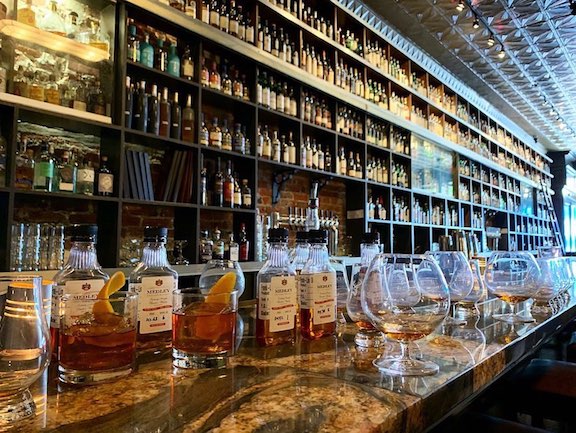
Bar owners are being thrust into the middle of contentious trade talks once again, as the latest duties follow tit-for-tat tariffs on European and American spirits in recent years. That’s compounding the challenge for businesses that have had to keep their doors shut for months during the pandemic.
If foreign spirits cost more for U.S. buyers, bars could opt to sell more domestically produced products like Bourbon whiskey. But for Noel Donovan, managing partner at Bloom’s Tavern in Manhattan, that just wouldn’t make sense. After all, Bloom’s is an Irish bar, so customers often order imported spirits.
That means Donovan may simply have to boost prices on the most popular drinks. “We have to charge appropriately for it to keep us in business, and we come out looking like the bad guys,” he said.
Tariffs are not new for the alcoholic beverage industry on either side of the ocean. In October, the U.S. imposed a 25% tariff on European spirits after the European Union taxed American whiskey imports at the same rate in 2018. Both sides should “get to the negotiating table,” said Chris Swonger, president of the U.S. Distilled Spirits Council, the trade association for producers and marketers of distilled spirits across the U.S.
Many bars have reopened recently with limited seating, per local requirements. To stay afloat in this new reality, businesses must offer more choices, not fewer, Rose Dining Saloon’s Thomas said.
“If you take away the ability to be able to offer those to your guests, you take away the reasons for them to keep coming back and trying something new,” he said. “That would be catastrophic.”
Bloomberg
© Bloomberg
The author’s opinion are not necessarily the opinions of the American Journal of Transportation (AJOT).
Similar Stories

Port Laredo awarded new $25 million BUILD grant to support US-Mexico trade
View Article
USMCA figures prominently at GSDF 2026 event in New York City
View Article
Steel trade closely watches Brownsville port’s channel deepening project
View Article
Florida produce sees opportunity with non-renewal of USMCA
View Article
Heightened Chinese Coast Guard patrols in Taiwan Strait may impact East Asia shipping
View Article“K” LINE to support relief efforts following earthquake off the Coast of Mindanao
The earthquake that struck off the coast of Mindanao, the Philippines, on June 8 caused severe damage in a number of regions.
View ArticleGet the most up-to-date trending news!
SubscribeIndustry updates and weekly newsletter direct to your inbox!
Follow us on social media:


