
Indonesia will export less palm oil to keep supplies at home

by Bloomberg Dec 30, 2022
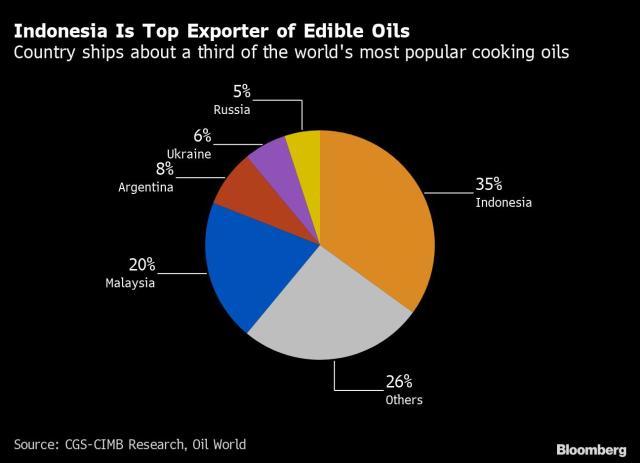
Indonesia, the world’s biggest palm oil producer, is set to export less of the commodity overseas as it tightens a policy requiring companies to keep more supply at home. Prices jumped more than 2%.
The government will cut the amount producers can export to six times the domestic sales requirement, down from eight times currently, according to Budi Santoso, director general of foreign trade at the trade ministry. The change will take effect from Jan. 1, he said by text message on Friday.
The policy — known as the domestic market obligation — requires palm oil exporters to sell a portion of their supply to the domestic market before they can receive a permit to export. It was implemented in late May this year following the lifting of Indonesia’s palm oil export ban, which shocked global markets as it sparked fears of worsening food inflation.
The government wants to ensure ample domestic supply during the Ramadan and Eid holidays in April as production will be seasonally weaker in the first quarter, said Firman Hidayat, an official at the coordinating ministery for maritime affairs and investment, which is involved in the decision making.
Indonesia will also impose a higher biodiesel blending mandate in 2023, which will increase the domestic consumption of palm oil. “We don’t want domestic supply to be reduced and risk an increase in local prices,” Hidayat said.
The move to tighten exports lifted palm oil prices in Kuala Lumpur, which hosts the world’s benchmark futures contract, as it should encourage Malaysia, the second-biggest exporter, to boost shipments. Futures climbed 2.2% to close at 4,178 ringgit ($949) a ton on Friday, the highest monthly close.
The latest policy would further restrict supply just as Indonesia is planning to increase the use of palm oil in biofuels, said Gnanasekar Thiagarajan, head of trading and hedging strategies at Kaleesuwari Intercontinental. He sees prospects for higher prices in the first quarter of 2023.
Despite surging about 9% this week, palm oil futures posted their first yearly decline in four years. They fell 11% in 2022, after more than doubling in the previous three years, including a jump of 30% in 2021 alone. According to the Malaysian Palm Oil Board, the average price of crude palm oil in Malaysia is expected to fall by another 25% next year due to higher local output and increased availability of other major vegetable oils.
Bloomberg
© Bloomberg
The author’s opinion are not necessarily the opinions of the American Journal of Transportation (AJOT).
Similar Stories
“K” LINE to support relief efforts following earthquake off the Coast of Mindanao
The earthquake that struck off the coast of Mindanao, the Philippines, on June 8 caused severe damage in a number of regions.
View Article
Bab el-Mandeb: a second ‘chokepoint’ for global trade?
View Article
USMCA enters a new era: What the next 10 years mean for U.S. Importers
View Article
Transportation Consumer Price Index – June 2026
View ArticleSogese H2 Outlook: Suez return could unleash capacity and trigger fresh port congestion
Container freight rates have continued to climb into July.
View Article
Key European shipping corridor hit by river and rail freight ‘double whammy’
View ArticleGet the most up-to-date trending news!
SubscribeIndustry updates and weekly newsletter direct to your inbox!
Follow us on social media:


