
State-imposed ‘cost burden’ hampering the German aviation industry

by Stuart Todd Aug 22, 2025
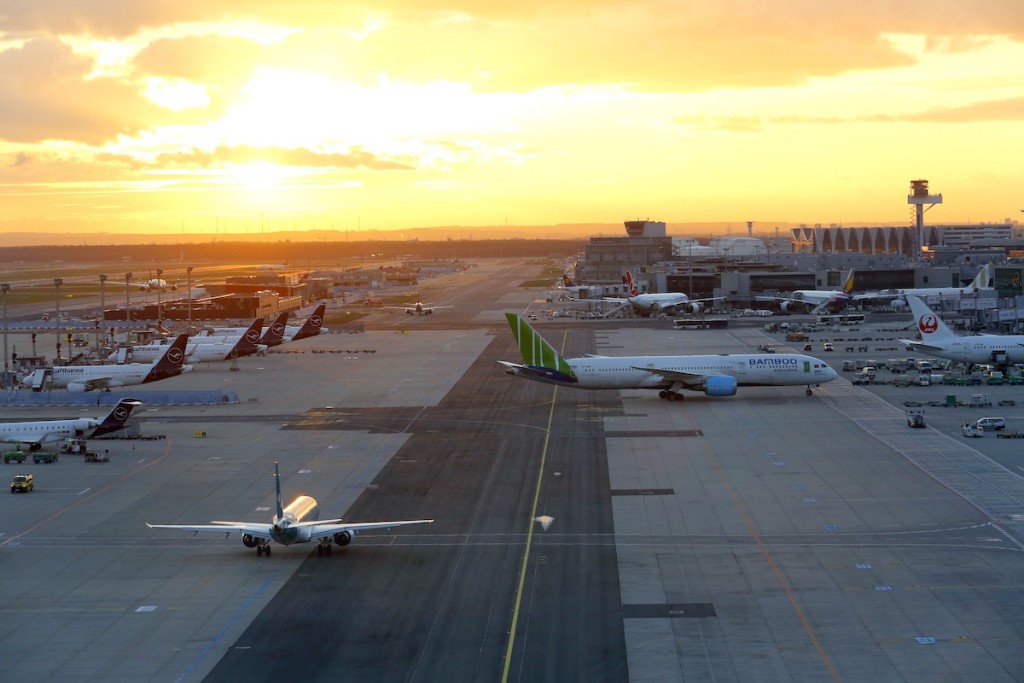
“Since 2019, state-imposed costs have more than doubled, and airlines are increasingly avoiding Germany. In view of this alarming development, it is essential that the federal government give priority to the crisis facing Germany as an air traffic hub.”
The words are those of Jens Bischof, chairman of the German aviation industry association, BDL, whose members are confronted with a prolonged post-COVID stagnation in both passenger and freight traffic, in stark contrast to buoyant growth trends elsewhere in Europe.
The BDL claims that the financial burden on the industry in Germany will increase by around €1.1 billion in 2025 and total around €4.4 billion euros, due to the government’s regulatory costs policy.
Moreover, according to an association survey, the number of aircraft stationed in Germany by European point-to-point airlines has fallen from 190 in 2019 to 130 in 2025, resulting in an estimated loss of 10,000 jobs and of €4 billion in annual economic value.
It also noted that the relocation of fleets abroad has reduced the international connectivity of German airports.
Bischof continued: "We can see the consequences at almost every airport in Germany: airlines are withdrawing their aircraft and deploying them in other European countries where cost levels are more competitive.”
‘High time to take countermeasures’
He noted that, contrary to what was stipulated in the new federal government's coalition agreement, the draft budget for 2026 does not include any tax or fee relief for flights departing from Germany.
“Reversing the recent increase in air traffic tax (introduced in May 2024) would have been a first signal for airlines to return. It is high time to take countermeasures. It is not too late for Europe's number one economic nation to regain its leading position in air transport connectivity. Here, the growth desired by the federal government can be unleashed with comparatively little effort.”
The new coalition government, led by Frederich Merz, came into office earlier this year and, in a statement, did promise to reduce aviation-specific taxes, fees, and charges and reverse the 20% increase in an air passenger tax.
However, a few months on, the sector continues to wait for the government to carry through its pledge.
Its statement added: “Our goal is to shape the modernization of the aviation industry and air transport towards fair competition and decarbonization. The coalition is committed to improving the international connectivity of German airports to support economic growth.”
Committed to achieving ‘measurable relief’ for cargo
The BDL is joined by German airline industry body, BARIG, in lobbying for a U-turn in Germany’s aviation policy, along with Frankfurt Airport operator Fraport and the Lufthansa Group.
“The industry in Germany has been facing numerous challenges, such as high location costs, complex processes, and a high level of bureaucracy. With the practical knowledge of our more than 30 international cargo airlines, we are committed to achieving measurable relief, accelerating processes, and improving the overall framework conditions for air freight in Germany,” commented its chairman and executive director, Michael Hoppe.
A BDL analysis highlights the significant gap in the air traffic control fee charged for the take-off of a B777 freighter between German airports and their European rivals.
For example, at Frankfurt, Leipzig/Halle, Cologne/Bonn, and Munich, it stands at €1,481 compared to Brussels (€938), Paris-CDG (€807), Milan (€716), and Istanbul (€72).
The BDL points to the cost differential as being a factor in cargo carriers shifting freighter flights to ‘cheaper’ airports outside of Germany.
‘High operating costs an issue’ for Lufthansa Cargo
As for the national champion, Lufthansa, its Lufthansa Cargo unit supports BDL's efforts to strengthen the competitiveness of air cargo businesses in Germany. “This will enable Lufthansa Cargo to provide high-quality services and connections for our global customers and the German and European economy. Through this, we can continue to secure jobs,” a spokesperson told AJOT.
Besides its main hub in Frankfurt, Lufthansa Cargo already operates freighters and markets belly capacities via the Group’s sub-hubs in Munich, Brussels, Vienna, and, since this summer, Rome-Fiumicino. The aim, primarily, is to offer customers stable global connections and reliable solutions as well as a wide range of routing options, the spokesperson explained.
“The modernization of our Lufthansa Cargo Center in Frankfurt reflects our commitment to our home hub, although the high operating costs are an issue, and we are in constant dialogue with the authorities to address this topic.”
‘Competitive disadvantage’ for Frankfurt
Frankfurt Airport operator, Fraport, is also a strong critic of German aviation policy, with CEO Stefan Schulte underlining: “As the federal government is failing to implement its pledge to make cuts to excessively high regulatory costs even in its 2026 budget, additional drivers for the German market are becoming an even more distant prospect. It (the government) is passing up an opportunity to strengthen the competitiveness of our industry.” He warned that the connectivity of German airports will be reduced as a consequence.
Turning to air cargo traffic specifically, a Fraport spokesperson told AJOT that German aviation policy, as it stands, is a handicap to the continued development of Frankfurt as Europe’s premier hub.
“The comparatively high state-imposed charges and especially the elevated air traffic control fees in Germany represent a competitive disadvantage for Frankfurt. These cost burdens lead some cargo carriers to shift their operations to countries with more favorable state charges and fees.
“Together with industry associations and partners, Fraport is therefore actively advocating for fair and competitive regulatory conditions in Germany to secure and further strengthen Frankfurt Airport’s position as a leading air cargo hub.”
‘Cautiously optimistic’ about H2 outlook
While cargo traffic at Frankfurt was up 3.7% in July, growth almost flat-lined in the first six months of the year, the stagnation contrasting sharply with the healthy increase in cargo tonnage at other airports in Europe.
Nevertheless, the Fraport spokesperson said that in terms of specific routes, the airport continues to see strong growth from the Asia-Pacific region, especially from China, where volumes have significantly surpassed pre-crisis levels.
However, cargo traffic to and from North America declined, largely due to freighter capacity being shifted from trans-Atlantic routes to those between the Far East and Europe.
Latin America and Africa performed positively, but the Middle East and some intra-European routes, including Istanbul, experienced declines.
“We are cautiously optimistic about the outlook for the second half of 2025, with moderate growth, driven by continued demand from the Asia-Pacific e-commerce sector and generally stable global trade. However, geopolitical uncertainties, including ongoing tensions in the Middle East and US trade policy, continue to pose risks, which we are closely monitoring,” the spokesperson added.
Stuart Todd
Similar Stories

Turkish Cargo has renewed its three IATA CEIV certifications in special cargo operations
View Article
FIATA seeks urgent clarification from airlines ahead of expedited implementation of IATA Direct Air Waybill changes
View Article[Freightos Weekly Update] Ocean rates steady as shippers brace for July hikes
US-Iran negotiations toward a final peace deal continue, sometimes under fire, as Iran escalates steps aimed at establishing itself as the sole authority over the Strait of Hormuz, leading to…
View ArticleECS Group launches Lebanese operations
ECS Group is establishing an Eastern Mediterranean presence and opening new offices in Lebanon on 1 July 2026.
View Article
ATC Aviation Services strengthens leadership team
View Article
Weekly Air Cargo Trends – June 15 to 21, 2026
View ArticleGet the most up-to-date trending news!
SubscribeIndustry updates and weekly newsletter direct to your inbox!
Follow us on social media:


