
Corvus and Toyota embark on delivering fuel cells for maritime industry

by Stas Margaronis May 21, 2021
Corvus Energy, the Norway and Canada-based marine battery maker, has announced that it will be developing large marine fuel cell power systems in cooperation with Toyota.
“Adding fuel cell modules to our product portfolio is a natural step for Corvus and advances our vision to be the leading supplier of zero-emission marine solutions. Fuel cell technology has reached a maturity level where scale-up of systems will be the next step. Toyota is in the forefront of the development and is by far the best partner for us to make this a success,” said Corvus Energy CEO Geir Bjorkeli.
Corvus’s new dedicated fuel cell division will design and certify the marine fuel cell system using the Toyota fuel cell technology as a building block for larger systems. Furthermore, a specific marine control system uniting the Corvus battery and Toyota fuel cell operation will be developed for easy integration with power management systems from a range of system integrators. Backed by Norsk Hydro, Equinor, Shell and BW group, Corvus plans to scale up production to mirror its world-leading position in battery systems
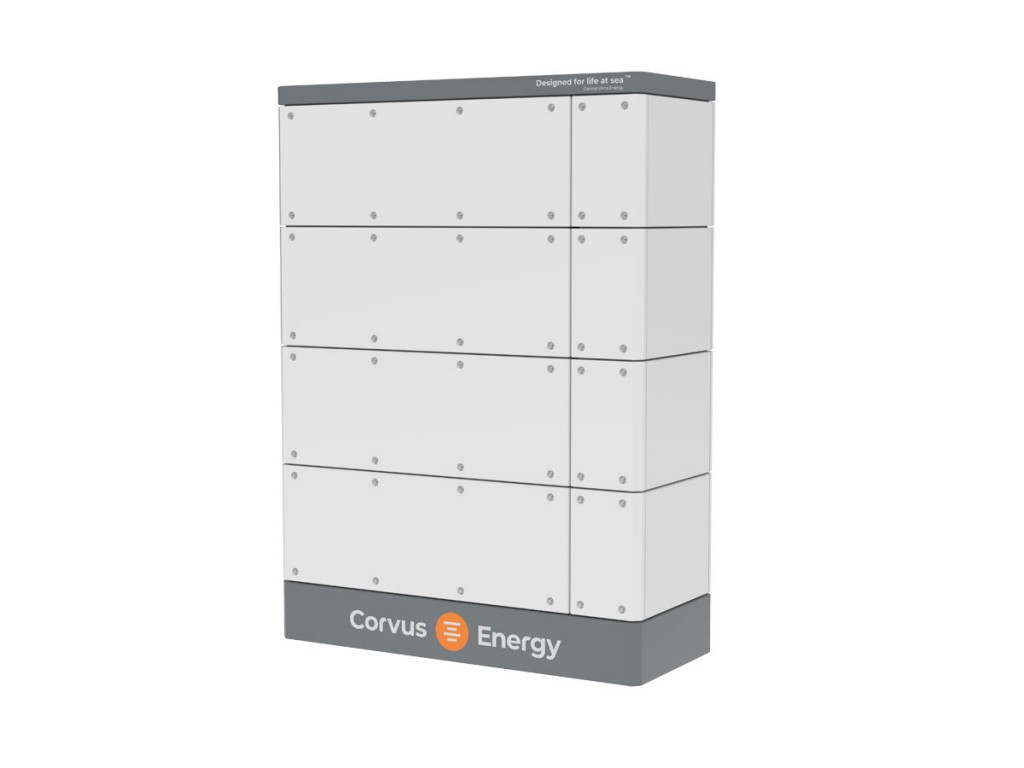
Corvus executives told AJOT that Corvus will source fuel cells built by Toyota and adapt them for deployment in ship engine rooms by providing software integration, marine casings, certification and engineering. The Toyota fuel cell technology has already been deployed in the car and truck industries.
Corvus sees three potential market applications:
The timeline for commercial delivery of Corvus fuel cell systems is 2024, in which an automated factory will begin producing products for new vessels. The systems will utilize Corvus designed control and packaging that will be sold to system integrators who will deploy them in the engine/fuel cell rooms of both new vessels and for retrofits.
- Short distance and point to point voyages, such as for ferries. These will primarily be powered through battery-technology with smaller range-extending fuel cells.
- Medium distance voyages that will use a mix of fuel cells and batteries. This segment is potentially the largest market and will require a mixture of fuel cells for longer distance voyages giving predictable power, while relying on batteries for sudden power requirement such as for instance a tug boat demanding full bollard pull for a shorter time periods.
- Long distance ocean voyages for ocean going cargo ships and tankers. These vessels will primarily utilize a fuel cell with only a minor battery application.
Corvus expertise in developing battery power for ferries and other vessels has given the company the ability to work with leading systems integrators and the class societies who provide the certifications necessary for global maritime standards.
Aside from Toyota, other partners are: Equinor, the Norwegian offshore oil and gas developer, shipowners Norled and Wilhelmsen, ship designer LMG Marin, cluster organization NCE Maritime Cleantech and the University of South-East Norway.
Corvus believes that the selection of renewable energy fuel has yet to be identified and that the leading candidates are hydrogen and ammonia but the overall fuel mix will be a large mixture of various green fuels. The gradual integration of fuel cells and batteries as an electro-chemical power source will be decided upon by market development and vessel operational requirements. This process should provide shipowners, shipbuilders, maritime certification societies and governmental agencies with better insights into the best power system technology and fuel source for their particular vessel.
Stas Margaronis
Stas Margaronis is a maritime journalist, publisher, and trade industry expert with more than 40 years of experience covering global transportation, ports, logistics, and infrastructure. He serves as California Ports Reporter for the American Journal of Transportation (AJOT), reporting on maritime trade, tariffs, and port developments across California’s major seaports. Margaronis is also President of the Propeller Club of Northern California and publisher of Rebuild the United States (RBTUS), covering infrastructure, shipbuilding, cybersecurity, AI, and national security. His background includes international trade, logistics management, and publishing, with experience spanning the United States and Asia.
Similar Stories

UK ETS: Expansion into the maritime sector from 1 July 2026
View Article
CMA CGM | FAK Rates - North West India, South East India, Sri Lanka & Pakistan to North Europe, the Mediterranean & North Africa
View Article
Hormuz traffic falls 59% as renewed escalation drives vessel avoidance
View Article
CrownX | Driver app wins business for air freight trucking firms
View Article
CMA CGM | PSS UPDATE- From North Europe to the Middle East and Red Sea
View Article
Ocean Infinity showcases maritime technology during visit from Business and Trade Secretary
View ArticleGet the most up-to-date trending news!
SubscribeIndustry updates and weekly newsletter direct to your inbox!
Follow us on social media:


