
California harbor trucking chief Loya prepares for a rough ride
by Stas Margaronis Nov 05, 2025
The current freight recession afflicting US harbor trucking is being made worse by the imposition of new 2025 tariffs, which “put accelerant gas to the problems,” causing trucking companies to reduce fleets and truck drivers, according to Robert Loya, CEO of the Harbor Trucking Association (HTA).
The HTA represents harbor trucking companies and drivers in California.

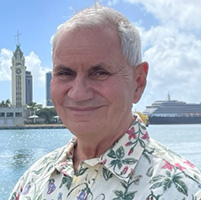
Loya, who has more than 30 years of experience in trucking and maritime logistics, replaced former HTA chief Matt Schrap on August 22nd.
In an interview with AJOT, Loya said: “Certainly 2025 has been a very concerning year to say the least: It's been a freight recession for the motor carrier community for the last couple of years. And the tariffs put, accelerant gas to the problem.”
Loya explained: “Unfortunately, the (declining ocean carrier) volumes, along with the tariffs, created a lot of problems for us. It's been a race to the bottom. Do I think that the rest of the motor carrier community is at risk? Absolutely. We're at risk for sure, a lot of our members have downgraded. If I were at a level, say 100 to 200 trucks, now I'm down to less than 100 trucks.”
He is seeing trucks parked and not operating in Northern and Southern California. “I'm concerned that given the current state we're in … and everyone knew that the last quarter was going to be tough this year. And you're seeing that there's a lot of equipment, chassis, trucks parked all over the Gateway here in LA, Long Beach. But even when I go up to Oakland and I visit the terminals up there and I'm driving around the Oakland area, I see a lot of the same, just not the same sheer volume as LA Long Beach,” Loya observed. Adding this situation could get worse by the end of 2025 and going into 2026: “If something doesn't change by the end of the year, you're going to see more companies (going out of business).”
To counter this, Loya urges shippers who rely on their trucking partners to build strong relationships with them: “What can help it? Just volume turn, turnarounds, and rates changing. When people ask me, What can a customer do? I said, Build relationships with your trucker. Pay them a good rate for his services or their services. Build relationships. When you need them, they'll be there.”
California Air Quality Issues
California clean air regulations have added to the burden of truckers, Loya says.
For example, last week, mistaken truck emission compliance data was transmitted by the California Air Resources Board (CARB) that briefly forced marine terminals at the Ports of Los Angeles and Long Beach to bar some truckers from picking up loads until it was discovered that the trucks had actually complied with air quality regulations.
Loya said that the error was cleared up in about two hours, but not before some terminals delayed accepting the corrected data, causing truckers to be delayed from making pickups and deliveries. The confusion and delays amounted to a “nightmare.”
In recent months, there have been several such data mistakes by CARB, Loya said.
Loya says that there are considerable challenges to switching over from diesel-powered trucks to zero-emission battery and hydrogen-powered trucks.
For example, the current weight of batteries in an electric truck adds at least 6,000 pounds or more to the weight of a truck, which means 6,000 pounds or more of reduced freight. “The weight difference is going to be an issue with our ag exporters and our heavy haulers. Yeah, you have a 6,000 to 8,000 to 10,000-pound difference. Can the equipment service the entire gateway, both LA Long Beach and Oakland? Meaning going over Donner Pass? Meaning going down Grapevine, up Grapevine, going over the Cajon Pass. Can it do all of that? No, not yet.”
However, Loya is hearing that new battery technologies and other improvements will reduce weight issues and expand battery ranges per charge.
Forum Mobility
Loya’s predecessor heading HTA, Matt Schrap, left HTA to join Forum Mobility, which is building truck charging stations for battery-powered trucks.
The move was a surprise because Schrap had expressed skepticism about the viability of battery and zero-emission trucks during his tenure at HTA.
Loya reports that Schrap is predicting that new zero-emission technology is on its way:
“I will tell you, my predecessor Matt Schrap feels very confident that there's a product that is close. And I said: “Cool, like we would love it.”
He says if the battery technology improves and becomes lighter and with a greater range: “That would make a huge difference. What Matt tells me about the product is: it's a game changer.”
In the meantime, Loya says the Trump administration's resistance to zero-emission technology and trucks will delay change but not stop it: “We view the change in Washington as just kicking the can down the road. We believe that California still has all intentions to be (a) 2035 zero emission trucking community.”
New English Proficiency Rules Cause Confusion
Another Trump administration initiative that has caused problems for the trucking industry is the new English proficiency rules announced by the U.S. Department of Transportation.
According to media reports, US Transportation Secretary Sean Duffy announced that 7,248 drivers were declared “out of service”—effectively debarred from driving—in 2025 for failing real-time roadside English Language Proficiency (ELP) checks. The figure marks a dramatic jump from roughly 1,500 such debarment orders until July 2025.
Loya told AJOT that HTA opposes any illegal alien driving a truck in the United States.
However, he notes the actual incidence of drivers not proficient in speaking English or reading traffic signs has sometimes been impacted by nervousness when confronted by law enforcement, “I don't know what kind of impact it's going to be. But do I believe drivers out there should pass this proficiency test for sure? And that is why we are working down here in LA and Long Beach with the Cal State Long Beach Center for International Trade and Transportation, and we are creating a proficiency class that will be offered to the marketplace.”
As Loya sees it, “Most of the time you have drivers who are good drivers who've been here legally, who have obtained a license legally, been driving safely, but when they get in front of an officer, they get nervous. And English may not be their first primary language, but they are perfectly good drivers, safe drivers. They have been here forever, and they just may stutter. And it's an interpretation, right? You have a set of questions that you have to answer. And if you are not saying it properly or you are not articulating the word here or there properly, he (law enforcement) could put you out of service. He or she could put you out of service if you are not reading the sign properly.”
Appointment Software Is Improving
At the Port of Oakland, truckers have been complaining about problems with the software they use to book appointments at marine terminals and specifically with the product produced by CargoSprint, which provides cargo payment and appointment services for truckers.
The company recently introduced a software upgrade that has been getting positive reviews from the Port of Oakland.
Loya says the new product is an improvement but still has a way to go:
“And I've expressed to (CargoSprint executives) Dave Casey and Andy Hwang: “What you guys are doing is great because it's better than going through each individual terminal and trying to secure an appointment. Is it there to service the entire life cycle of an inbound and an export? Not yet. Dual transaction, empty return? It's not there yet. It doesn't mean that it won't get there.”
Meanwhile, the situation for drivers working at the ports of Long Beach and Los Angeles has been better: “Because the trucking community had to come up with its own way to move cargo efficiently through the Gateway, given the constraints they were operating under. We went out and got a third-party vendor to create a universal terminal appointment system for us, for the Gateway, and why was that necessary? Well, when we could not get appointments, the terminals would tell us, “Keep checking, keep checking for new appointments to be released, keep checking for appointments to be cancelled.” You can imagine we got 12 terminals, and they expect us to sit there and hit ‘refresh’ until we find a new appointment. Now, who has the bandwidth or the finances to hire somebody to do nothing but hit refresh until they secure appointments?”
The result is that out of 100 appointments made, 97 are showing up.
Stas Margaronis
Stas Margaronis is a maritime journalist, publisher, and trade industry expert with more than 40 years of experience covering global transportation, ports, logistics, and infrastructure. He serves as California Ports Reporter for the American Journal of Transportation (AJOT), reporting on maritime trade, tariffs, and port developments across California’s major seaports. Margaronis is also President of the Propeller Club of Northern California and publisher of Rebuild the United States (RBTUS), covering infrastructure, shipbuilding, cybersecurity, AI, and national security. His background includes international trade, logistics management, and publishing, with experience spanning the United States and Asia.
Similar Stories

RapidLink repairs expands service offering to power unit repairs and maintenance
View Article
U.S. Transportation Secretary Duffy tours Ports of Indiana-Burns Harbor on Lake Michigan
View Article
Maersk enters $3 billion U.S. battery logistics market
View Article
Descartes releases shipping report on Strait of Hormuz disruption
View Article
Orange EV deploys its 2,000th electric terminal truck to Coke Canada Bottling
View Article
Warehouse on Wheels posts highest-ever EcoVadis score, earning third consecutive sustainability badge
View ArticleGet the most up-to-date trending news!
SubscribeIndustry updates and weekly newsletter direct to your inbox!
Follow us on social media:


