
Thousands of rail cars stuck on Vancouver line after fire

by Bloomberg Jul 08, 2021
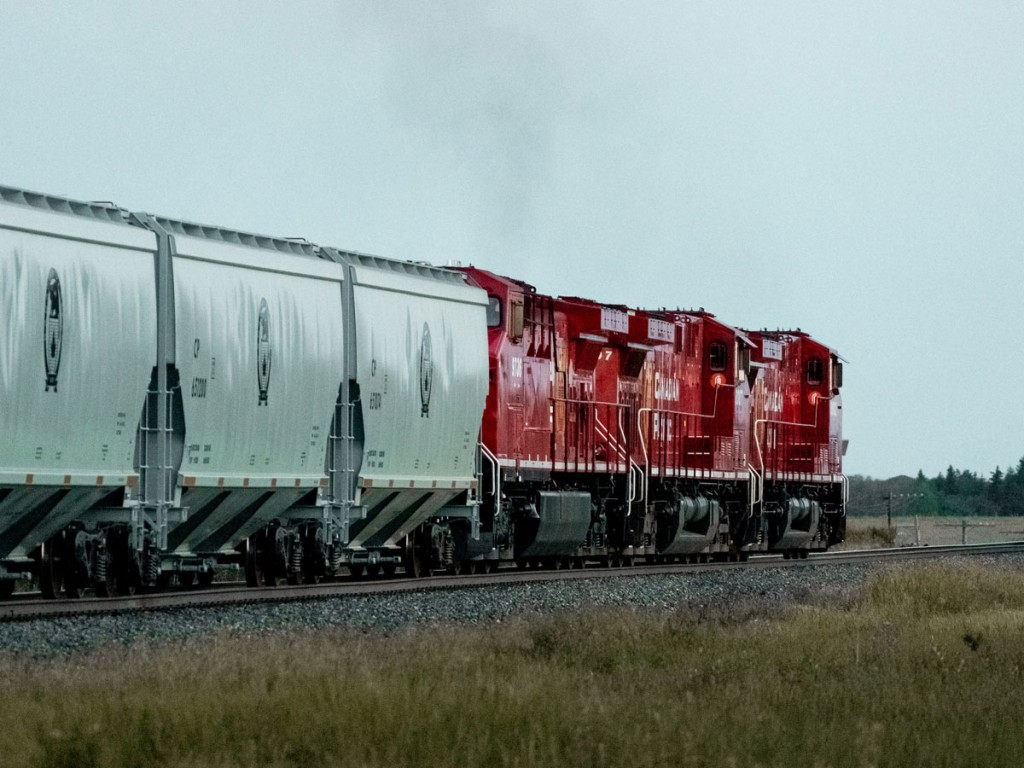
Thousands of rail cars loaded with grain are idled in the Vancouver corridor after Western Canadian wildfires damaged two main lines, while repairs enable a small but rising number to reach the country’s biggest port.
Train movement resumed earlier this week on the Canadian Pacific Railway Ltd. line near Lytton, British Columbia, following a June 30 wildfire that burned down the village and damaged the railway’s track. Canadian National Railway Co.’s line sustained more significant damage to a bridge. The bulk of goods—from lumber to grains to crude oil—that are transported by rail for export move along these two lines.
“Once the scope is further established, CN will be in a better position to estimate the time needed for repairs,” CN Rail said in an emailed statement. “In the interim, CN is also working to detour limited traffic where possible to decongest the network.”
While it is unlikely that any of this cargo will be rerouted to Eastern Canada due to the great distance and costs that would incur, some trains are turning north to the port in Prince Rupert, B.C. The much smaller port is just south of the Alaskan Panhandle.
“We’ve started to have some requests to ship to Prince Rupert,” said Valerie Cossette-Coffey, director of rail logistics for Ray-Mont Logistics Inc. in Montreal.
Some of the company’s grain shipments to Vancouver are expected to arrive Thursday, she said.
Rerouting grain rail cars is “not like calling a taxi,” said Mark Hemmes, president of Quorum Corp., a grain transportation monitoring company in Edmonton, Alberta. “You’re better off just to wait it out.”
Both railways have issued embargos, meaning that shippers must request special permits to transport loaded rail cars while they work through the bottleneck of train traffic, Hemmes said.
- Roughly 2,670 grain cars en route to Vancouver have been idled in the last 48 hours, while more than 300 arrived at the port within the past day, Ag Transport Coalition data show.
- Two vessels headed to the Port of Vancouver made abrupt turns north toward the Prince Rupert port in recent days, according shipping data compiled by Bloomberg.
- Hapag-Lloyd Says Vancouver Port Is Operating at Limited Capacity.
- Grains aren’t perishable on a near-term basis, and the transportation delays shouldn’t threaten product quality.
- July and August are typically the slowest months for grain transportation in Western Canada.
Bloomberg
© Bloomberg
The author’s opinion are not necessarily the opinions of the American Journal of Transportation (AJOT).
Similar Stories

UP and CN announce agreement to improve North American rail connectivity
View Article
CSX Corp. announces second quarter 2026 results
View Article
UP and CN reach agreement to expand customer opportunities in connection with merger
View Article
AAR reports rail traffic for the week ending July 18, 2026
View Article
How to protect high value-high security freight
View Article
AAR launches Freight Rail Research Consortium to advance research and policy
View ArticleGet the most up-to-date trending news!
SubscribeIndustry updates and weekly newsletter direct to your inbox!
Follow us on social media:


