
The Panama Canal adapts: Strategic measures for water savings
Oct 12, 2023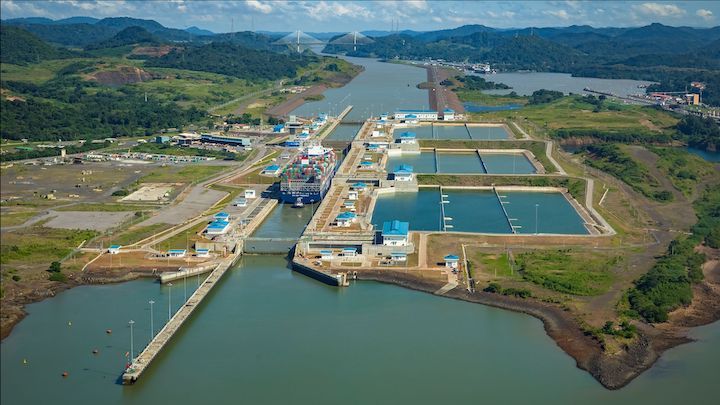
It is not an exclusive concern of the Panama Canal or the country; it is a global problem that affects humanity. The year 2023 records historically high temperatures in the Atlantic Ocean, exacerbated by the presence of the El Niño phenomenon, which raises the temperature of the Pacific Ocean and, in the case of Panama, delayed the start of the rainy season, resulting in a significant decrease in the levels of freshwater in the reservoirs of the Panama Canal, essential for its operation.
Resource Optimization
To address these challenges, the Canal has taken water-saving measures to supply 55% of the population and provide competitive and continuous service to global maritime trade.
One of the implemented measures is cross-filling in the Panamax locks. This maneuver involves reusing water from one lock chamber for use in the other, saving the equivalent of the average consumption of five daily transits.

Additionally, to the extent that the size of the vessels allows, simultaneous lockages are performed, with two ships transiting at the same time, occupying the same chamber.
Furthermore, the transit schedule has been optimized to maximize water savings in each chamber and accommodate the highest number of vessels. In the neopanamax locks, the direction and scheduling of transits are analyzed to make the most of every drop of this resource.
Since 2020, the Canal has been working on the Water Program. This initiative seeks to provide a comprehensive response to the water challenge, with a focus on ensuring this vital resource for the next 50 years.
Other Measures
As announced two weeks ago, starting November 1st, the average transits through the Canal will be adjusted to 31 vessels per day: nine through the neopanamax locks and 22 through the panamax locks. Customers are recommended to make reservations, when possible, to secure their transit through the route.
The Panama Canal announces any measures that may affect customers well in advance, before the furthest vessel departs. Additionally, the maritime route provides real-time information for customers to make their business decisions, through the links also maintained at the bottom of this note.
The Panama Canal fulfills its constitutional responsibility to manage freshwater resources for human consumption and provide efficient service to global maritime trade through a transparent and sustainable approach.
Similar Stories

U.S. Transportation Secretary Duffy tours Ports of Indiana-Burns Harbor on Lake Michigan
View Article
Maersk enters $3 billion U.S. battery logistics market
View Article
Descartes releases shipping report on Strait of Hormuz disruption
View Article
Orange EV deploys its 2,000th electric terminal truck to Coke Canada Bottling
View Article
Warehouse on Wheels posts highest-ever EcoVadis score, earning third consecutive sustainability badge
View Article
The Port of Virginia debuts the deepest harbor on US East Coast, marks progress on North Berth project
View ArticleGet the most up-to-date trending news!
SubscribeIndustry updates and weekly newsletter direct to your inbox!
Follow us on social media:


