
While shippings “Underwater Noise Impact” progress is welcomed, IMO falls short of immediate action
Jan 27, 2023The Clean Arctic Alliance today welcomed the progress made this week by the International Maritime Organization (IMO) to address the impact of underwater noise from ships on marine wildlife but warned that further delay in the development of an action program clearly setting out the next steps - including compulsory measures - will prevent significant action that would decrease vessel noise in our oceans [1].
While a revision of the 2014 underwater noise guidelines to reduce the impact of underwater noise from ships was finalized this week during the IMO’s Sub-Committee on Ship Design and Construction in London (SDC 9), the IMO failed to discuss the next steps, which should have included a path forward to the development of compulsory measures to reduce underwater noise [1]. The revised guidelines are expected to be approved by the Marine Environment Protection Committee in July (MEPC 80) and should be applied immediately [2].
“While the Clean Arctic Alliance welcomes the revision of the 2014 underwater noise guidelines as a milestone in its efforts to reduce the impact of underwater noise from ships on marine wildlife, we are disappointed that the IMO failed to find time to discuss a program of action or to identify the next steps that must be taken”, said Dr Sian Prior, Clean Arctic Alliance Lead Advisor. “The IMO must now prioritize the development of action including binding measures which will lead to rapid reductions in underwater noise, globally and especially in the Arctic.”
“We also welcome the significance of how the IMO’s revised guidelines acknowledge the importance of Indigenous Knowledge in understanding and addressing the threats of shipping noise, and its potential impacts on the waters of the Inuit homeland [3]. It's crucial now that the IMO also recognizes and addresses the need for additional and urgent measures to reduce the impact of underwater noise from increased shipping in the sensitive Arctic region”, added Prior.
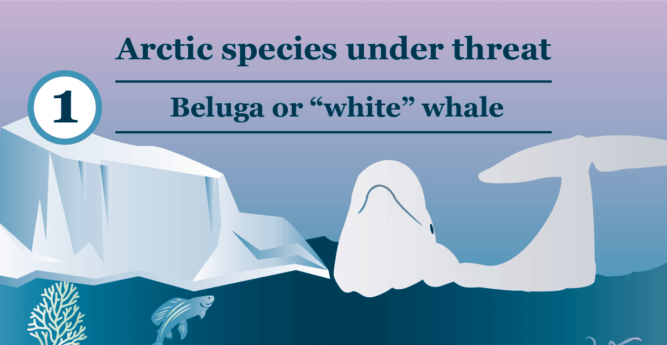
See all infographics: Arctic Species Under Threat
A survey of the commercial shipping industry found that very few ships utilized the 2014 guidelines, and stated the greatest barrier to uptake was the fact that they are only recommendatory in nature [4]. During SDC 8 in January 2022, a working group confirmed these findings when it agreed that voluntary guidance, as opposed to regulations, was a key barrier limiting the uptake of the guidelines [5].
“The onus must now be on member states and the shipping industry to apply the IMO’s guidelines that have until now been ignored”, said Sarah Bobbe, Arctic Program Manager, at Ocean Conservancy.
“The IMO’s future work on underwater noise must include compulsory measures such as the adoption of limits on underwater radiated noise from ships so that the overall failure to reduce underwater noise is addressed globally,” added Bobbe. “In addition to global measures, even more, stringent regional measures to reduce acoustic pollution from vessels in areas such as the Arctic will be necessary”.
About Underwater Noise
For many marine organisms sound is the most important means of communication. Underwater, vision is very restricted and without good hearing ability, elementary functions such as navigating, finding prey, and partners can be hampered. This is of particular importance for marine mammals.
The Arctic has been almost free of anthropogenic sound for a long time, but with increased human activity, the Arctic Ocean is becoming noisier every year. An important source of continuous underwater noise is shipping, more specifically the propeller and the engine. Since shipping has increased substantially during the last couple of decades, underwater noise is becoming an increasing problem, contributing to a serious impact on the Arctic ecosystem. A number of Arctic species including the narwhal and beluga whales are particularly sensitive to anthropogenic noise.
Similar Stories

Merchant fleet trapped west of Hormuz drops below 700 vessels
View Article
Wallenius Wilhelmsen takes delivery of first Shaper Class vessel
View Article
OOCL received three awards from the Hong Kong Marine Department and the HKSOA
View ArticleQuantix announces planned CEO transition following successful financial restructuring
Quantix, North America's leading supply chain services company dedicated to the chemical industry, today announced the appointment of Nate Gesse as Chief Executive Officer, effective July 20, 2026.
View Article
U.S. Court of Appeals upholds FMC decision that detention fees must promote freight fluidity
View Article
OOCL named Best Shipping Line – Intra Asia at the 2026 AFLAS Awards
View ArticleGet the most up-to-date trending news!
SubscribeIndustry updates and weekly newsletter direct to your inbox!
Follow us on social media:


