
Panama Canal extends max length and increases draft for Neopanamax locks
Jun 15, 2021The waterway begins to accommodate vessels up to 370.33 meters in maximum length overall and announces a 15.24-meter (50-foot) draft ahead of the expansion’s fifth anniversary
Ahead of the fifth anniversary of its expansion, the Panama Canal has increased the maximum allowable length for vessels transiting the Neopanamax Locks. Since May 21, the maximum length overall (LOA) for commercial and non-commercial vessels acceptable for regular transits of the Neopanamax Locks is 370.33 meters (1,215 feet), up from 367.28 meters (1,205 feet).
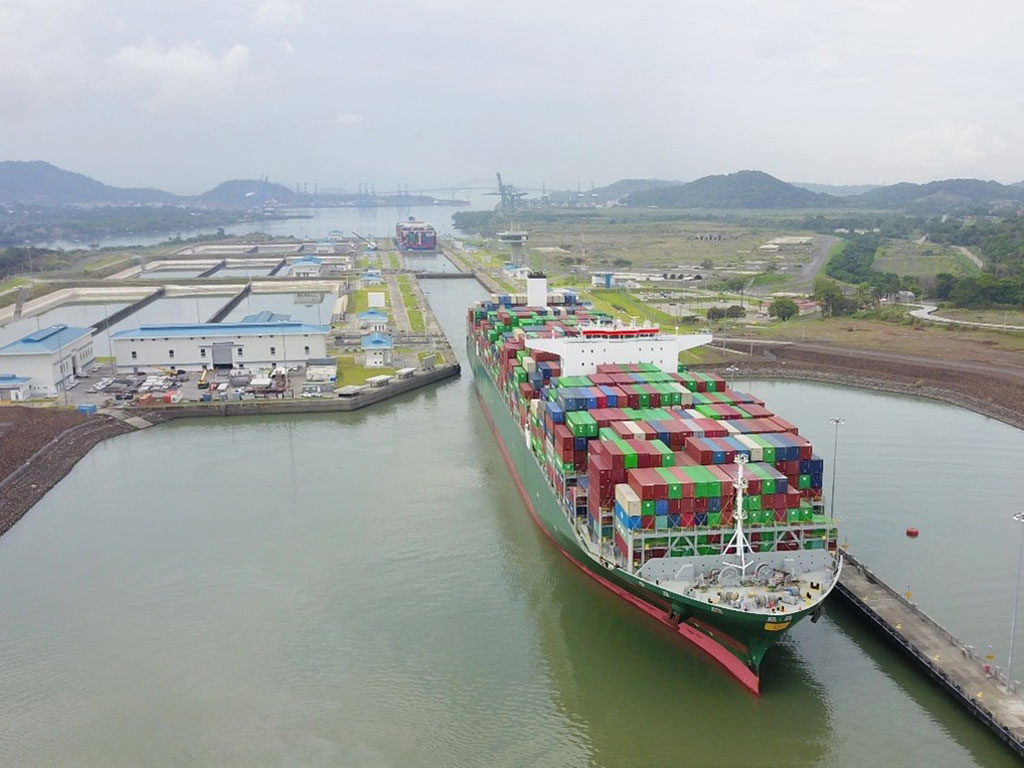
The increase means that now 96.8% of the world’s fleet of containerships can transit the Panama Canal, shortening routes and benefiting economies around the world.
“This change was made possible by our team’s experience operating the Neopanamax Locks safely and reliably over the past five years,” said Panama Canal Administrator Ricaurte Vásquez Morales.
The extended LOA will provide shipping lines with greater flexibility in making decisions for the deployment and construction of vessels with greater capacity that can transit through the Panama Canal.
This announcement comes after a series of trial transits to confirm the safety of operations. They included the 2019 transit of Evergreen's 369-meter-long (1,210 feet) Triton, which became the largest vessel in dimension and container cargo capacity to transit the Panama Canal since the inauguration of the Neopanamax Locks in June 2016. Since then, other ships with the same dimensions and container cargo capacity have also transited the waterway, including the Talos and Theseus, among others.
In addition to this increased length overall, the Canal has announced that it is now offering 15.24 meters (50 feet) draft, the highest level allowed at the waterway. Increased rainfall and successful water management at the Gatun Lake had kept the draft at 14.93 meters (49 feet) since April 2021.
The Panama Canal’s efforts go beyond its operational updates. Given the shorter traveling distance and larger capacity it offers, the Canal reduces vessels’ fuel consumption and therefore emissions, having a positive impact on the reduction of global greenhouse gases compared to other routes. In addition, the Canal is focused in reducing its own carbon footprint, establishing a roadmap to become a carbon neutral entity by the end of the decade, while maintaining its commitment to participate in environmental efforts in the maritime industry worldwide.
Similar Stories

DOT and Port of Long Beach sign agreement to test nuclear-powered vessels
View Article
PortXchange joins the Port of San Diego’s Blue Economy Incubator
View Article
Straddle carrier vs. RTG crane: What terminal operators need to know in 2026
View ArticleHHLA lowers expectations for the 2026 financial year
Based on the business development to date and updated estimates for the further development of the 2026 financial year, the Executive Board of Hamburger Hafen und Logistik AG (HHLA) today…
View Article
RSGT International delivers landmark USD 170 million port investment in Bangladesh
View Article
Port Laredo awarded new $25 million BUILD grant to support US-Mexico trade
View ArticleGet the most up-to-date trending news!
SubscribeIndustry updates and weekly newsletter direct to your inbox!
Follow us on social media:


