
Hydrogen-powered trains to be introduced in northern Italy

by Reuters Mar 26, 2025
Residents and visitors to Valcamonica, an Alpine region in northern Italy, will be able to ride hydrogen-powered trains from next year.
The pioneering project, the first of its kind in Italy and supported by an investment of 367 million euros ($396 million), marks a significant adoption of hydrogen fuel for a rail line, despite the high production and operational costs.
The region currently uses polluting diesel trains, which will be replaced by 14 zero-emission hydrogen-powered trains made in Italy by a unit of French group Alstom.

This fits with the European Union's strategy for energy transition, where green hydrogen, produced from water electrolysis using renewable energy, is set to replace a portion of fossil fuels currently used in transportation and power generation.
Andrea Gibelli, chairman of transport company FNM, controlled by the Lombardy Region and overseeing the project, acknowledges the high costs involved.
However, he stresses that this is the only viable option for the 110-kilometre (70 mile) mountainous stretch of Valcamonica, which lies to the northeast of regional capital Milan.
"Electric trains are more cost-effective, but they require a different infrastructure and electrifying the line would cost around 450 million euros, in addition to the social costs of closing the line," Gibelli told Reuters.
Half of the investment in the project has been spent on acquiring the Coradia Stream trains, each of which has four carriages.
Hydrogen-fuelled Alstom trains have already been put into use in the German state of Lower Saxony.
Despite hydrogen costing around 10-15 euros per kilogram, making it less competitive compared to other fuels, Gibelli argues that it is still a sound choice when considering the costs saved from not having to shift to electric, and the resulting ecological benefits.
The project has addressed the supply issue associated with hydrogen by installing electrolysers directly on-site for the production of green hydrogen using electricity from renewable sources, Gibelli added.
Travellers will not see an increase in fares as the project costs are ringfenced. Funding is being provided by the regional government and from the EU-backed post-COVID Recovery and Resilience Plan (PNRR). ($1 = 0.9273 euros)
Reuters
Similar Stories

Before 2026 diesel spike: US zero emission trucks deployments were rising
View Article
Gregg-Smith, President, Marine & Offshore, Bureau Veritas, takes over as IACS Council Chair
View Article
bound4blue eases eSAIL® adoption with ABS review of Pwind calculation methodology
View Article
A mobile green hydrogen refueling station enables the immediate deployment of a hydrogen bus fleet in Northern Germany
View Article
Uni-Tankers selects Sofar Ocean’s Wayfinder to sharpen voyage decision-making
View Article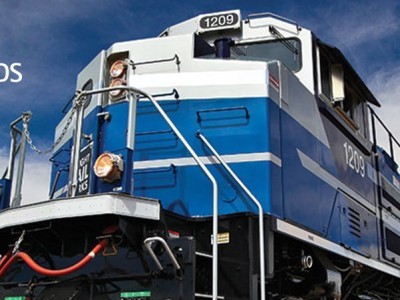
AAR reports rail traffic for the week ending June 27, 2026
View ArticleGet the most up-to-date trending news!
SubscribeIndustry updates and weekly newsletter direct to your inbox!
Follow us on social media:


