
Port of Baltimore: In depth planning
by George Lauriat about 2 hours ago
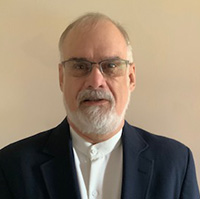
A conversation with Jonathan Daniels, Executive Director of the Maryland Port Authority (MPA) on planning for the future.

Strategic Planning
The Maryland Port Authority (MPA) held its kickoff meeting for developing the new strategic plan in February. And as with any strategic plan, the first step is taking inventory of the Port’s assets.
Of course, the process of developing a new strategic plan is beginning just two years after the collapse of the Francis Scott Key Bridge on March 26, 2024, following the allision with containership Dali. And while the appropriations for the rebuilding of the bridge have been approved, distribution of the funding is less clear. Nonetheless, the Port of Baltimore with its wide variety of cargo handling facilities has a great many assets to incorporate in planning for the future of the port.
When asked by the AJOT about how the strategic plan was coming together, Jonathan Daniels, Executive Director for the Maryland Port Administration (MPA), said of the initiative, “Finally, to get ourselves in a position where we could move forward on what is a very... lengthy and a very intense process…. Fortunately, as a port, we are so diverse in both what’s across our public docks, but also through the private terminals. So, that gives us a wide breadth of opportunities to be able to evaluate.”
Strategic port plans come in a wide variety of flavors, as each port has different physical configurations, different goals and each individual state and city handle the administration of their ports differently.
Still there is a common denominator. Cargo ports only exist as long as ships continue to call, and keeping commercial cargo ships calling is the overarching mission statement.
Daniels said in the case of the Port of Baltimore, “This is truly going to be a commercially based, strategic plan that allows us the opportunity first to take advantage of what our existing strengths are. And when you take a look at our growing container operation, which we set a record [with] in 2025 during a recovery period, to our continued strength as being number one in the US on Roll-on/Roll off tonnage…. We certainly will not abandon what has been our strengths. But we’ll look at building upon that experience, building upon those cargoes, and also looking at new opportunities. Whether that is the ability to generate new and more diverse cargo opportunities but also taking a look at trade lanes and regions of the world where we may be have not been as strong.”
For Daniels, seeing the Port’s position through a commercial lens, trade lanes and regions where the port hasn’t been as successful, rather than being a negative, potentially represent new business in the future. “By focusing on the commercial aspects…and looking and then coming in and developing the marketing components and the marketing plan to be able to evaluate and be able to put in practice those new commercial opportunities. That [also] gives us the opportunity…to take a look at our infrastructure, and work with the State Department of Transportation and our legislative body to be able to make the proper investments to be able to grow the port long-term.
The Unseen Infrastructure
Understandably while discussing port infrastructure and planning, the conversation customarily steers towards gantry cranes and other handling equipment that contribute to TEU (twenty-foot equivalent units) counts. However, a great deal of a port’s infrastructure lies unseen. And like an iceberg the vast infrastructure below the surface underpins the entire enterprise.
A critical piece of that unseen infrastructure is the ship channels and turning basins to the piers and the dredging that enables the channels to function.
When asked about channels, dredging and other infrastructure planning Daniels, Executive Director for the Maryland Port Administration (MPA), the authority overseeing the Port of Baltimore remarked, “Oftentimes when we talk about industrial development, the focus is on new cranes, it’s on new berth capacity. But we understand to utilize the cranes and utilize berth capacity to its highest expected use, we have to have the channels that are maintained so that we can make the promises to the carriers that we will have the depth necessary. Not only for their existing vessel rotations, but for those that they’re looking at in the future, which very well involve larger vessels.” Adding that, “I think what happens is many ports, many organizations, overlook what’s below the water is … an expensive process. It is a long and complicated process to be able to get through to get your records of decision and the necessary permits. And certainly, the aspect of environmental stewardship and environmental sensitivity is something that’s taken into consideration during that process.”
And the MPA’s role in overseeing the well-being of the network of channels is more than that of an outsider. It is one of a steward or administrator in partnership with other involved organizations including national, state, local governmental agencies, nonprofits, community groups and businesses entrusted with maintaining the region’s channels.
New Sites for a New Future
As Daniels explains, “When I take a look at dredging…we [MPA] manage the Dredge Material Management Program (DMMP) on behalf of the state [Maryland]. So, that gives us immediate access and knowledge in driving that program in cooperation with the US Army Corps of Engineers (USACE). So, when we go through our (MPA) planning process, we have insight not only into the dredging operation — and it’s a 20-year look ahead.” That two-decade view is intricately woven into the Port’s own strategic planning.
“That [planning] takes into consideration not only the channels and the depth of the channels and maintaining through a robust operations and maintenance program with the Army Corps of Engineers, but also how those depths impact terminal development and external transportation infrastructure that’s going to be necessary for us to allow for efficient movement through the entire supply chain process… But we’re trying to remove what can be oftentimes seen as the negative .... And an example of what we’re doing there right now is it’s not only about the removal, but it’s about the placement of dredged material in an environmentally sensitive way that allows us the opportunity to meet the obligations for the amount of material that’s taken out of the channels in the Chesapeake Bay and in the Baltimore Harbor. We currently manage two dredge material containment facilities as well as we are coming to the end-of-life replacement for what we call Poplar Island, and that’s the site that takes the majority of the material that’s down in the Chesapeake Bay channels. And in order to set ourselves up for decades of available placement, we are in the process right now of constructing what’s called the Mid-Chesapeake Bay Island Restoration Project. And that will be rebuilding both Barren and James islands and that will give us capacity for at least the next 30 years.
Arrival of the Next Generation
When Arthur C. Clarke wrote, “Trying to predict the future is a discouraging and hazardous occupation,” he could have been talking about forecasting the future sizes of containerships. Twenty years ago, the average size containership was around 2,200-2,500 TEUs — today, that is basically the size of a small container feeder ship. And forecasting the size and shape of a containership 20 or 30 years into the future is indeed a hazardous venture. Already a new generation is on the way, underscoring the importance of dredging and channel maintenance. Baltimore’s main ship channel is at 50-feet, which is the desired depth for container ship calls on the US East Coast. When asked about how the MPA keeps up with boxship trends, Daniels answered, “That’s where we would work hand-in-hand with the carriers and our terminal operators here to make some level of determination as to what that’s going to look like. First and foremost, our responsibility is to maintain the existing channel depth…and that takes care of the current workforce vessels that call the port.”
A new generation of vessels will be calling soon. “Evergreen currently calls weekly service with vessels in excess of 15,000 TEU. They have indicated that they are going to be starting to come out with a 16,000 TEU vessel in the not-too-distant future. So, that string of vessels calling will be able to be accommodated within our existing depth and channel configuration.
Now with that, there will be an expansion of a dredging project here with the authorization of what we call the Cedar Loop project, and that’s going to allow us the opportunity to dredge and expand the channel closer to the Seagirt terminal and allow for more effective and safer turning operations when accommodating vessels of that size coming into and coming off of the Seagirt Marine Terminal, which of course is our primary container dock.”
For the MPA, the opportunities for tomorrow’s new markets and new carriers begins with a roadmap drawn from the planning done today.
George Lauriat
Similar Stories

U.S. Transportation Secretary Duffy tours Ports of Indiana-Burns Harbor on Lake Michigan
View Article
OCIMF appoints Don Davis as Managing Director to support the next phase of maritime safety across the energy sector
View Article
Bird returns to Port of Montreal to take over as new President and CEO
View ArticleEnstructure acquires LOGISTEC’s marine terminal operations
A mega-deal creates a mega-terminal group.
View Article
AJOT’s Top 100 Container Ports
View Article
Tradepoint Atlantic – A growing ‘city of logistics’
View ArticleGet the most up-to-date trending news!
SubscribeIndustry updates and weekly newsletter direct to your inbox!
Follow us on social media:


