
Opinion: Proposed A’s Ballpark and Condo Development Threatens Future of Port of Oakland

by Stas Margaronis Jul 19, 2021
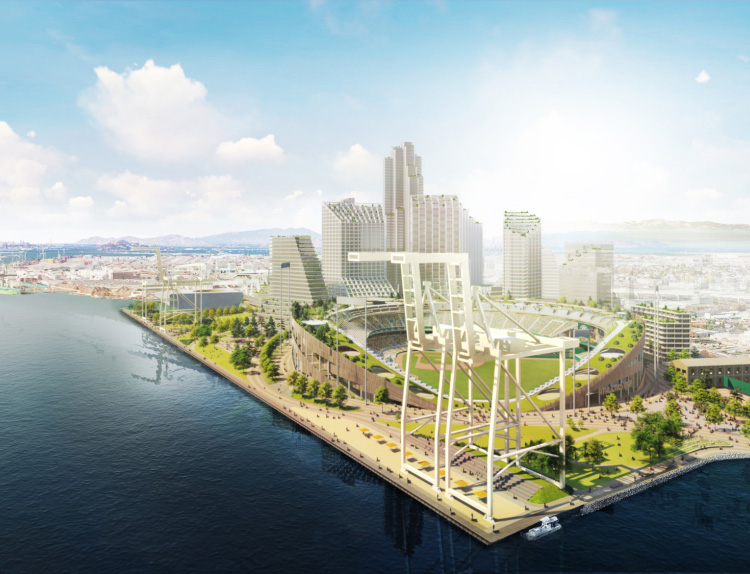
Since first conceived, the Oakland A’s plan to build condominiums and a new ballpark at the Port of Oakland’s Howard Terminal has sounded alarms for import/export stakeholders at the West Coast’s third-busiest port.
Three years into this proposal, the Oakland City Council and the Alameda County Board of Supervisors have yet to commission an impartial economic impact report detailing the risks posed by the condominiums and ballpark development to Port of Oakland activities. These include: terminal operations, trucking, rail, maritime jobs, and the broader impact on California’s economy.
On July 20th, the Oakland City Council will consider a resolution approving “Non-Binding Terms Of A Development Agreement With The Athletics” regarding the Howard Terminal development.
As of 2017, an economic impact report commissioned by the Port of Oakland found that the Seaport supported 520,328 jobs in the state of California and cargo moving via the Seaport supported an additional 492,597 related jobs throughout the state.
Currently, the California Ports of Oakland, Los Angeles and Long Beach are generating even more volume and activity, benefiting from a post – Covid re-alignment of ocean carriers’ sailings that is increasing vessel calls from Asia. This re-alignment accommodates faster turnaround times sailing to California ports as opposed to longer sailing times from Asia to U.S. Atlantic and Gulf ports.
This greater efficiency has helped increase jobs and volumes at the Port of Oakland.
On July 16th, the Port of Oakland announced that for first half 2021, total cargo volume at the Seaport increased 11.4% over 2020. The Port said it handled the equivalent of 1.3 million 20-foot containers in the past six months. If the pace holds, the Port’s year-end volume would surpass 2.6 million containers for the first time ever.
Ed Denike, president of SSA Containers, which operates the largest container terminal at the Port, Oakland International Container Terminal (OICT), strongly opposes the Oakland A’s proposal. The threat of a waterfront entertainment development has caused carriers to reconsider long-term agreements due to the fear that pleasure boats visiting the ballpark will create traffic inside the Oakland Estuary, making it more difficult to safely turn ships around for loading and unloading containers at OICT.
Mike Jacob, vice president and general counsel of the Pacific Merchant Shipping Association (PMSA), which represents U.S. Pacific Coast container terminals and ocean carriers, is also against the project, arguing that the project poses “a long-term threat to growth at the Port of Oakland.” Carriers view the influx of non-industrial vehicles and pedestrians onto major access roads and across rail lines as a serious threat to the Port’s logistical efficiency.
Located on the narrow Oakland Estuary, OICT hopes to utilize a portion of $280 million in new state funds to help finance the widening of the existing turning basin, adjacent to Howard Terminal, to ease and accelerate the turning around of mega-container ships destined for the port.
Harbor trucking executives have serious concerns about the development as well:
- GSC Logistics Chairman Scott Taylor has warned City officials that gridlock will result when port trucks converge with ballpark-bound drivers, causing back-ups on Oakland streets and connections to the heavily trafficked I-880 freeway, a key link in the movement of goods from the port.
- Harbor Trucking Association president Weston LaBar warned in May that “once politicians create a tourist or housing attraction in these areas, it’s the beginning of the end of industrial sites” adding that “the Port of Oakland is too important to sacrifice for luxury condominiums when it is the lifeblood of the agriculture export industry in California.”
The City of Oakland’s Draft Environmental Impact Report for the Oakland A’s ballpark project notes that about 3,000 harbor trucks “may be in operation on any given day, with each driving one or more trips,” but does not evaluate the potential for disruption and delays when trucks arrive and depart marine terminals just as 35,000 fans arrive at the stadium.
The Oakland Athletics, who say they are ‘Rooted in Oakland’, are demanding that the City of Oakland approve their proposed condominium and ballpark development and pay a minimum of $855 million in infrastructure costs. If the Council refuses, the A’s say they will relocate the team.
Before the Oakland City Council votes on the development, it should objectively assess the A’s proposal’s economic impact to the Seaport and whether the two are compatible.
Hopefully, the City Council and the Alameda Board of Supervisors will recognize the value of the Port of Oakland, it’s growth potential and its major economic role, including bolstering one million jobs in California performed by longshore workers, truckers, freight forwarders, warehouse workers, ag producers and growers, customs brokers, stevedores, tugboat crews, and ship pilots.
The future of one of California’s most critical economic and industrial engines is at stake.
Stas Margaronis
Stas Margaronis is a maritime journalist, publisher, and trade industry expert with more than 40 years of experience covering global transportation, ports, logistics, and infrastructure. He serves as California Ports Reporter for the American Journal of Transportation (AJOT), reporting on maritime trade, tariffs, and port developments across California’s major seaports. Margaronis is also President of the Propeller Club of Northern California and publisher of Rebuild the United States (RBTUS), covering infrastructure, shipbuilding, cybersecurity, AI, and national security. His background includes international trade, logistics management, and publishing, with experience spanning the United States and Asia.
Similar Stories

First phase of the widening of the Yangtzekanaal complete, next phase started
View Article
Port of Long Beach, MARAD sign first-of-its-kind partnership agreement on nuclear energy in maritime
View ArticleFederal government attacks California clean air shipping waivers
If Congress rescinds the waivers, workers, communities and small businesses will pay the cost
View Article
Port of Rotterdam remains resilient in an uncertain world
View Article
DOT and Port of Long Beach sign agreement to test nuclear-powered vessels
View Article
PortXchange joins the Port of San Diego’s Blue Economy Incubator
View ArticleGet the most up-to-date trending news!
SubscribeIndustry updates and weekly newsletter direct to your inbox!
Follow us on social media:


