
Advances in technology led to record new well productivity in the Permian Basin in 2021
Sep 30, 2022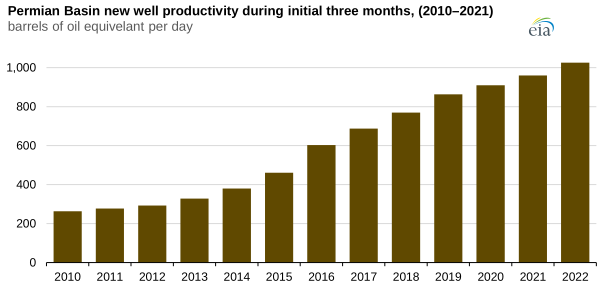
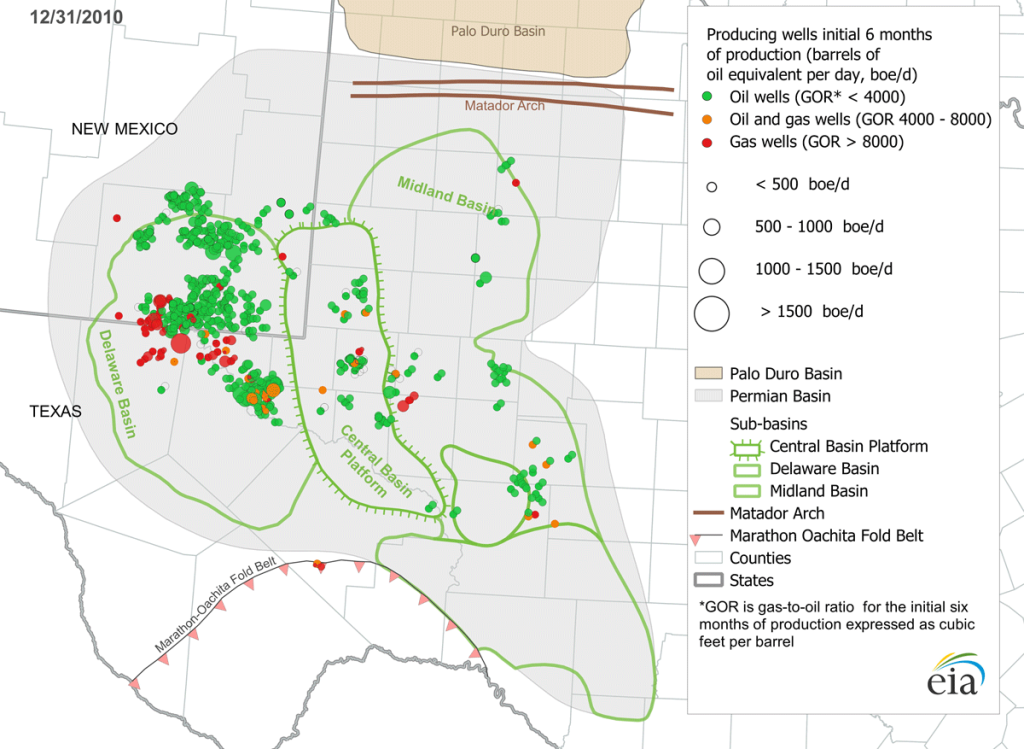
The Permian Basin in western Texas and eastern New Mexico is one of the world’s most prolific unconventional oil- and natural gas-producing regions. The Permian Basin has become more productive because of the technological advancements in drilling and completion techniques, which allow operators to economically extract hydrocarbons from the low permeability reservoirs.
The stacked reservoirs of the Permian Basin, and the Delaware and Midland subbasins within it, vary in thickness and depth. Improved geological understanding, known as subsurface delineation, helps operators place wells to optimize well spacing in the most productive areas.
The Permian Basin has produced oil and associated natural gas from vertical wells for decades. Since 2010, advances in hydraulic fracturing and horizontal drilling led to rapid production growth. The number of new horizontal wells increased to 4,524 in 2021, compared with 350 in 2010. In June 2022, the Permian Basin accounted for about 43% of U.S. crude oil production and 17% of U.S. natural gas production (measured as gross withdrawals).
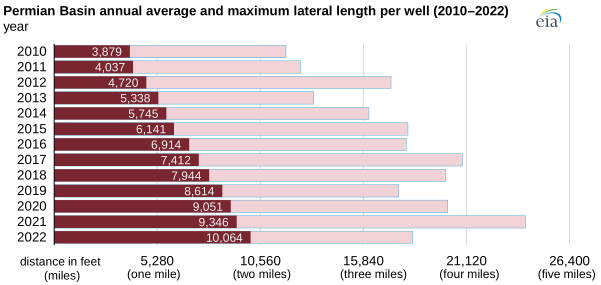
The length of a well's horizontal section, or lateral, is a key factor in good productivity. In the Permian Basin, the average well horizontal length has increased to more than 10,000 feet in the first nine months of 2022, compared with less than 4,000 feet in 2010.
Compared with other U.S. basins, the Permian Basin benefits from lower operational costs, better access to oilfield services, and its proximity to U.S. Gulf Coast refineries and export facilities.
The average productivity of new wells in the Permian Basin has grown for 12 consecutive years. Core areas of the Permian Basin, and its Delaware and Midland subbasins, contain multiple stacked shale formations. By 2021, each new well drilled in the Permian Basin was producing an average of 960 barrels of oil equivalent per day. Our Short-Term Energy Outlook forecasts that Permian production will continue to drive growth in total U.S. crude oil and natural gas production.
Similar Stories

Magaya reports strong second quarter of 2026, highlighted by industry collaboration, AI innovation, and expanded connectivity
View Articletms selects FourKites to ensure seamless global delivery of high-demand consumer goods
FourKites’ solution helps tms save time and money while creating a more reliable experience for customers and internal teams.
View Article
Hyster-Yale Materials Handling and NTT Data announce breakthrough physical AI solution in manufacturing
View ArticleCoast and Fleetio deepen partnership to unit fuel and fleet maintenance data
Expanded capabilities connect cost management and maintenance operations in a singular workflow
View Article
MOL, IBM Japan jointly develop AI platform
View ArticleSGS Compass launches for data-driven global supply chain risk management and compliance
SGS, the world's leading testing, inspection, and certification company has announced the launch of SGS Compass, its supply chain solution for enhanced data-driven global supplier risk management and compliance.
View ArticleGet the most up-to-date trending news!
SubscribeIndustry updates and weekly newsletter direct to your inbox!
Follow us on social media:


