
Today in Energy: EIA expects average U.S. gasoline and diesel prices to decrease in 2024 and 2025
Jan 17, 2024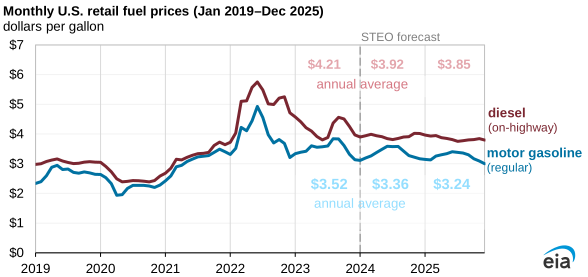
Data source: U.S. Energy Information Administration, Short-Term Energy Outlook (STEO), January 2024
In our January Short-Term Energy Outlook (STEO), we expect average U.S. retail gasoline prices to decrease in 2024 because of increased inventories related to increased refinery capacity. In 2025, we expect slightly reduced gasoline consumption to further decrease prices. We expect similar supply-side factors to lower retail diesel prices in 2024 and 2025, although U.S. diesel consumption will likely exceed 2023 in both 2024 and 2025.
We expect crude oil prices in 2024 to be similar to those in 2023. As a result, our lower gasoline and diesel price outlooks next year reflect narrowing crack spreads, the difference between the wholesale prices of gasoline and diesel compared with crude oil. Crack spreads reflect the price of refining, and a lower crack spread indicates lower refining cost. Our lower forecast crack spread for gasoline is driven by our expectation of increasing availability of supply even as consumption is reduced.
In 2023, additional refinery capacity came online, raising U.S. operable refinery capacity from 18.06 million barrels per day (b/d) in January 2023 to 18.31 million b/d in December 2023. We expect the availability of the new refinery capacity will ease price pressure on petroleum products in 2024. In 2025, we expect lower crude oil prices, which will also reduce gasoline and diesel prices.
New international production from refineries in the Middle East, particularly Kuwait, has also increased the pool of gasoline and diesel on world markets. Increasing global refined products supply will contribute to easing international price pressure on both fuels. We expect gasoline consumption to remain relatively flat in 2024 and to decrease only slightly in 2025, by less than 1%. In both years, we expect slowing but consistent economic growth. Flat or decreasing gasoline consumption despite economic growth is relatively uncommon. Since 1990, gasoline consumption has declined amid positive economic growth in only two years (2010 and 2012).
Although we expect more diesel production and less strain on U.S. and global inventories to reduce diesel prices in 2024 and 2025, we also expect annual U.S. average diesel consumption to grow modestly, by 1.3%, or about 50,000 b/d, in 2024 supported by continuing economic growth.
Our forecast for gasoline and diesel prices is subject to significant uncertainty, including any factors that might affect crude oil prices and pass through to retail fuel prices. In addition, prices could be higher if more unplanned refinery shutdowns, further disruptions to international trade flows, or new logistical bottlenecks that hinder the movement of fuels between regions occur. By early 2025, we currently expect LyondellBasell’s Houston refinery in Texas will close and Phillips 66’s Rodeo refinery in California will complete its ongoing conversion to renewable diesel production, although the timing of both may vary based on market conditions and the schedules of the owners.
Similar Stories

Petroleum markets responded to disruptions in the Middle East in the second quarter
View Article
“K"LINE - Experimental Floating Axis Wind Turbine (FAWT) installed in a bay of Iki City, Nagasaki
View Article
EIA gasoline prices July 14,2026
View Article
PowerCell secures multi-MW Power Generation order for AI data center
View Article
Fuel price shocks ripple through freight markets
View Article
How offshore industries can reduce water pollution risks
View ArticleGet the most up-to-date trending news!
SubscribeIndustry updates and weekly newsletter direct to your inbox!
Follow us on social media:


