
Tesla hands over first ‘badass’ big rig semis to PepsiCo

by Bloomberg Dec 02, 2022
Tesla Inc. handed over the first of its electric Semi trucks, a milestone for the automaker more than five years after it unveiled the vehicle.
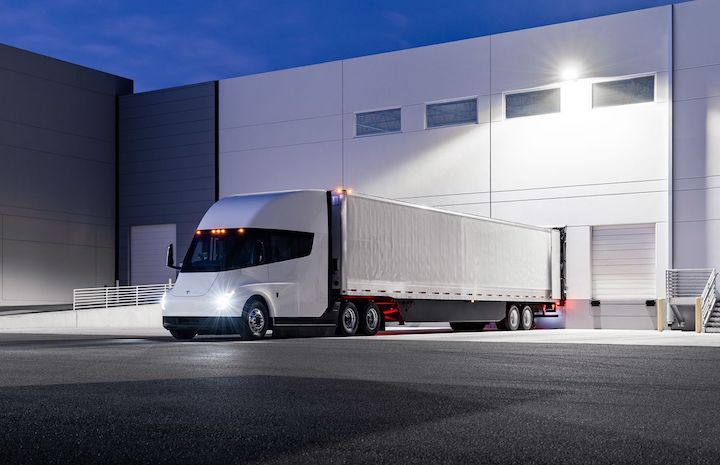
“If you want the most badass rig on the road, this is it,” Chief Executive Officer Elon Musk said Thursday at Tesla’s battery factory near Reno, Nevada. He capped off the delivery event with a handover of key cards to two PepsiCo Inc. executives.
While passenger cars get most of the buzz, electrifying big commercial vehicles is crucial to transitioning to more sustainable transportation. Tesla estimates that while combination trucks are just 1% of the US vehicle fleet, they account for 20% of vehicle emissions.
Tesla has designed the Semi around the driver, with a central seating position, room to stand up and ample storage space. The company released footage of a 500-mile (805-kilometer) demonstration run carrying a full load from its plant in Fremont to San Diego on one charge.
To quickly replenish the Semi’s battery, Tesla developed a liquid-cooled cable capable of one-megawatt charging. Musk said the technology coming to the company’s superchargers next year also will be used for the upcoming Cybertruck.
Tesla shares were little changed as of 5 a.m. Friday in New York, before the start of regular trading.
During Tesla’s last earnings call, Musk said the company is aiming to produce 50,000 Semis for North America in 2024. He appears to have taken the product off the back burner after the passing of the Inflation Reduction Act, which makes tax credits of as much as $40,000 available to commercial vehicles. Musk didn’t discuss production volume or pricing Thursday evening.
Large fleet operators like PepsiCo, Walmart Inc., Meijer Inc. and J.B. Hunt Transport Services Inc. were among the companies that placed non-binding reservations for the Semi starting in 2017. The first deliveries are going to PepsiCo’s Frito-Lay plant in Modesto, California.
Tesla will put the Semi to work carrying freight between the company’s factories in Nevada and California so that engineers can continually refine the product, Dan Priestley, the program manager for the truck, said on stage. He thanked customers for sticking with the company through setbacks to the model initially scheduled for production in 2019.
“Sorry for the delay,” Musk said. “The sheer amount of drama between five years ago and now is insane. A lot has happened in the world, but here we are, and it’s real.”
Bloomberg
© Bloomberg
The author’s opinion are not necessarily the opinions of the American Journal of Transportation (AJOT).
Similar Stories

DAT national spot truckload pricing data, June 28–July 4, 2026
View Article
Savannah’s Brampton Road Connector opens July 16
View Article
Gulftainer unveils global trade infrastructure strategy to build one of the Middle East’s largest integrated logistics ecosystems
View Article
U.S. airlines’ May 2026 aviation fuel cost up 3.0%, consumption up 3.5%, and fuel cost per gallon down 0.5% from April 2026
View Article
Clean energy on the front line at Heathrow Animal Reception Centre
View ArticleSpot Market Insights: Dry van spot rates reached all-time high heading into July 4th
Broker-posted dry van spot rates rose to an all-time high during the week, topping the prior record at the end of 2021 by slightly more than a penny per mile.
View ArticleGet the most up-to-date trending news!
SubscribeIndustry updates and weekly newsletter direct to your inbox!
Follow us on social media:


