
European ports impacted more by reduced cargo vessel calls than other global regions
May 08, 2020IAPH-WPSP Port Economic Impact Barometer for Week 19 reports persisting cross-border congestion for some ports, resulting in modal switch away from trucks
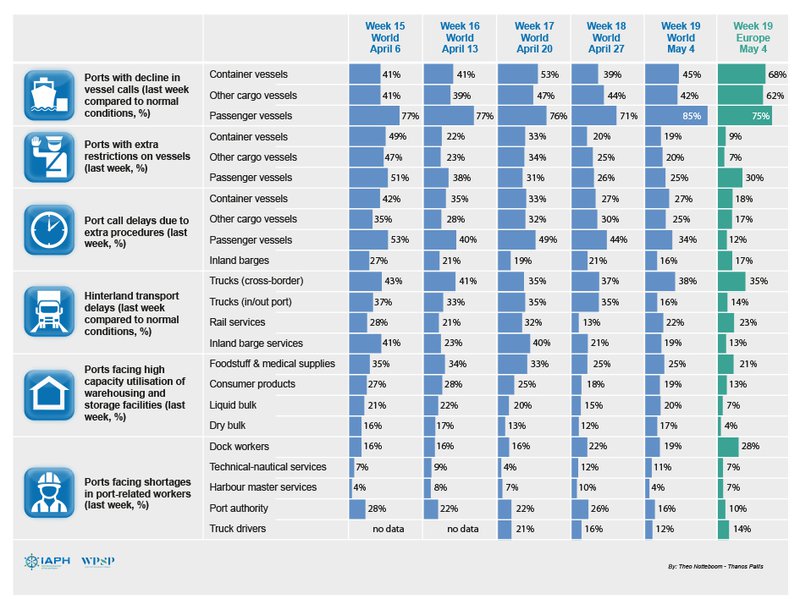
In the fifth report prepared and released by the WPSP-IAPH World Ports COVID19 Task Force, a focus on European ports reveals that many of them are already feeling a greater impact of reduced cargo vessel calls than other regions of the world. The European region also has a smaller share of ports now facing capacity shortages of warehousing and storage facilities with a progressive overall decline in utilization being reported over the time period. Also, it appears that the European Region is slightly more impacted by shortages of dockworkers, with 28% reporting this occurrence during the recent week.
Full impact of reduced cargo vessel calls yet to be felt
Despite the impact of vessel calls increasing across the board, almost all of the 76 ports taking part in this week’s survey are reporting a 5 to 25% decrease. The share of ports facing significant decreases (in excess of a 25% drop) falls sharply from 10-11% in the previous two weeks to less than 2% this week. The situation for the other cargo vessels has remained fairly unchanged compared to last week. The number of ports reporting reductions of more than 25% remained at a level of 12 to 14% throughout weeks 16 to 19.
Co-author Professor Thanos Pallis commented : “The general loss of cargo for containers is probably less evident than expected, as April has closed with negative year-on-year figures that are much better than initially forecasted. The decrease in the number of container vessels is not always directly related to the COVID 19 crisis. Some report on the increase in blank sailings, mainly on the Europe-Far East routes, for others there are no more blank sailings registered but total calls are still down some 20% with respect to a normal fully operational week. Regional feeders in substitution of calls by mega vessels are working well, but shippers do not always welcome the longer transit times associated with transshipment.”
Similar Stories

Strong U.S. exports, infrastructure constraints and global shifts reshape inland freight flows
View Article
GPA’s Ocean Terminal renovation now 55 percent complete
View Article
Public and private sector collaboration keep freight moving on inland waterways
View Article
Tecon Suape invests in new container scanner to enhance port security, operational efficiency
View Article
Small businesses awarded $54 million in Port of Long Beach contracts
View Article
Ports of Barcelona and Shanghai strengthen their alliance by signing a strategic agreement
View ArticleGet the most up-to-date trending news!
SubscribeIndustry updates and weekly newsletter direct to your inbox!
Follow us on social media:


![[Freightos Weekly Update] Ocean rates climbing, with more increases expected soon](https://www.ajot.com/images/uploads/article/_thumbs/Support_grows_for_India%E2%80%99s_new_maritime_CCTV_rules.jpg)


![[Freightos Weekly Update] Container rates starting to spike on peak season rush](https://www.ajot.com/images/uploads/article/_thumbs/LB_stacked_containers.JPG)
