
EIA expects U.S. fossil fuel production to reach new highs in 2023
Jan 21, 2022After declining in 2020, the combined production of U.S. fossil fuels (including natural gas, crude oil, and coal) increased by 2% in 2021 to 77.14 quadrillion British thermal units. Based on forecasts in our latest Short-Term Energy Outlook (STEO), we expect U.S. fossil fuel production to continue rising in both 2022 and 2023, surpassing production in 2019, to reach a new record in 2023.
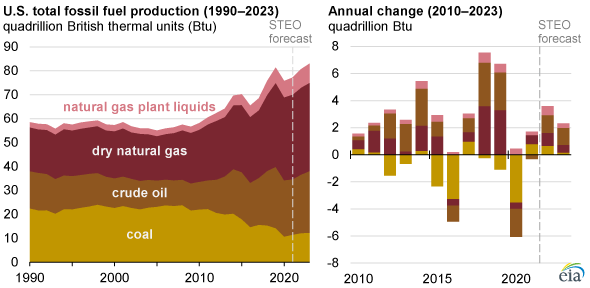
Of the total U.S. fossil fuel production in 2021, dry natural gas accounted for 46%, the largest share. Crude oil accounted for 30%, coal for 15%, and natural gas plant liquids (NGPLs) for 9%. We expect those shares to remain similar through 2023.
U.S. dry natural gas production increased by 2% in 2021, based on monthly data through October and estimates for November and December. In our forecast, improvements in drilling efficiency and new-well production will contribute to production increases of 3% in 2022 and 2% in 2023.
U.S. crude oil production dropped slightly, by an estimated 1%, in 2021, but we expect it to increase by 6% in 2022 and 5% in 2023. We forecast that, in 2022 and 2023, crude oil prices will remain high enough to encourage growth in the number of active drilling rigs and continued improvement in drilling efficiency.
U.S. coal production increased by an estimated 7% in 2021, driven by increased demand for coal because of rising natural gas prices. Coal's comparatively lower prices made coal more economical for use in electric power generation compared with natural gas. In 2020, U.S. coal production had fallen to its lowest level since 1964. We forecast that coal production will increase 6% in 2022 as coal-fired electricity generators rebuild inventory levels. However, we forecast that coal production will only increase by 1% in 2023 as demand for coal in the electric power sector declines.
U.S. NGPL production increased by 4% in 2021. We expect U.S. NGPL production to increase by 9% in 2022 and then by 4% in 2023. Because NGPLs are a coproduct of natural gas, our forecast for rising NGPL production is linked to our forecast for rising natural gas production.
Principal contributor: Ornella Kaze
Similar Stories

JB Hunt reports second quarter 2026 results
View Article
Cadeler takes delivery of 11th vessel: Wind Ace
View Article
Port of Los Angeles’ Seroka report 1 million TEUs in June up 12%
View Article
Port of Antwerp-Bruges stands firm in challenging first half of 2026
View Article
Lloyd’s List Intelligence launches Maritime Intelligence Unit to help organizations navigate rising maritime risk
View Article
Port of Los Angeles records best June ever, tops 1 million container units
View ArticleGet the most up-to-date trending news!
SubscribeIndustry updates and weekly newsletter direct to your inbox!
Follow us on social media:


