
Suez Canal traffic returns…with questions

by Stuart Todd Dec 11, 2025
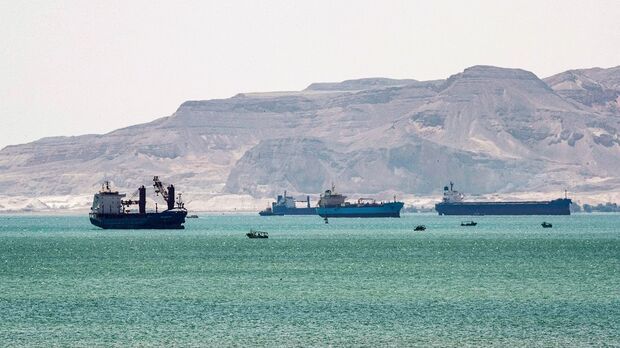
Suez Canal return beckons for ocean shipping lines, and with it, significant challenges...
With the threat of attacks from Houthi militia in Yemen on ocean shipping in the Red Sea continuing to recede, a gradual return of transit through the Suez Canal appears to be on the cards early in 2026.
But the move is likely to bring with it a risk of congestion at European ports followed by a capacity spike and intensified rate pressures, according to market analysts.
For the past couple of years, the vast majority of container and bulk shipping lines have diverted vessels around Africa to Europe rather than run the risk of them coming under fire from the Iran-backed rebel group, whose action has been in support of Palestinians in Gaza and against Israel.
Re-routing of ships has been costly, with the addition of up to two weeks to journey times and a considerable increase in fuel bills and CO2 emissions.
Ironically, it has also bolstered freight rates as the additional miles around Africa effectively increase the number of ships necessary to move the Asia-to-Europe freight, shifting the supply and demand balance.
Full East-West Loop in January
Now momentum is building among lines for a return to Suez. Maersk Group has signed a strategic partnership agreement with the Suez Canal Authority to resume transits by its vessels through the Canal starting this month (December) - a precursor to a full return in the near future.
"The return of Maersk's vessels to transiting through the Suez Canal is an initiative that will be followed by the return of many shipping lines,” said CEO Vincent Clerc.
CMA CGM has announced its INDAMEX service will next month transit the Suez Canal on fronthaul and backhaul voyages between India/Pakistan and the US East Coast.
The first vessel to complete a full-service loop via the Canal will be sailing from Karachi to New York on 15 January.
“We are still some way from a large-scale return of container shipping to the Red Sea, but CMA CGM’s announcement of a full east-west loop via Suez is certainly a notable step in the right direction,” observed Peter Sand, Chief Analyst at ocean freight intelligence platform, Xeneta.
He said carriers, notably CMA CGM, had been testing the water recently by transiting the Canal on a select few voyages, particularly backhaul legs to Asia when there is less cargo onboard.
“Until now, these transits have been on a case-by-case basis, diverting voyages originally scheduled to sail around the Cape of Good Hope. CMA CGM’s announcement is important because it is a structural change with a service proforma to transit the Suez Canal on every sailing,” Sand noted.

Capacity to flood the market, rates to tumble?
Sand insisted that CMA CGM’s announcement did not automatically mean an imminent ‘return to normal’ for container shipping in the Red Sea.
“Carriers will be carrying out risk assessments, and the security situation remains fragile. The assessment will look at the Houthis’ ability, opportunity, and intent to attack ships. We know they have the ability, but carriers will want assurance over their intent, especially because the opportunity will increase as more ships begin sailing through the region.”
He also pointed to the current overcapacity, accompanied by a fall in spot rates – even before vessels transit through Suez in significant numbers again.
Early in December, average spot rates on Far East front-hauls to the US East Coast and North Europe were down 57% and 53% respectively compared to a year ago.
“If we see other carriers follow CMA CGM, then capacity will flood the market, and we could see freight rates fall hard. This could push carriers further towards loss-making territory, but they will be fully aware of this outlook and ready to respond.”
‘New Disruption’ to Come First
Rico Luman, senior sector economist, Transport and Logistics at Dutch bank ING, stated that resuming Red Sea transit will save more than 3,000 nautical miles and roughly 10 days of sailing on the Asia–Northwest Europe route.
“Over time, this will significantly free up vessel capacity, as the detour currently absorbs around 6% of global fleet capacity, on top of frequent delays. For this reason, a return to the Suez Canal will make waves, just as the massive diversion initially did,” he explained.
However, Luman warned that a return to the previous norm will first come with “new disruption.”
Vessels arriving earlier than expected could trigger port congestion, which may again clog container terminals and cause delays for ships and empty containers across supply chains. Lines might blank sailings to mitigate this effect, but overall, freight rates could rise, especially if this shift coincides with the Lunar New Year (LNY).
“Once sailing schedules are stabilized, significant downward pressure on rates is likely. More capacity will be released, while new vessels from the extensive order book will continue to enter service in 2026.
“At the same time, container volume growth is expected to remain low, further driving rates down. And this effect will surpass the operational cost savings. Slow steaming could absorb some of the excess capacity, and carriers are expected to accelerate the scrapping of older vessels after five years of minimal idling. Still, this process will take time and will not fully offset the surplus.”
Ocean Carriers in No Hurry, Insurance an Issue
Although a return to the Red Sea could reasonably occur within the next six months, Luman believes lines are keen to avoid acting too swiftly.
“The container shipping sector has endured a year of strain amid trade shocks, alliance restructuring, and an overhaul of sailing schemes. Cape-based schedules have stabilized, and arrival reliability has improved. Carriers want to avoid double disruption – switching back and forth between routes – before committing to the Red Sea and need confidence in the duration of any change. This is particularly important for the new Gemini alliance network of Maersk and Hapag-Lloyd, which has promised customers an arrival reliability of 90%, far higher than the average.”
Another reason to be cautious is insurance. Premiums for transiting the Canal surged and likely need to fall significantly, or voyages must be approved before proceeding. Carriers will probably start testing the route on the backhaul to Asia with less cargo and lower reliability. All in all, carefully timing the resumption is also in container liners' financial interest, he said.
Ports Prepare for Transition
Online freight shipping marketplace and platform Freightos also underlined that the return of container traffic to the shorter Suez route could result in the sudden, early arrival of vessels and lead to “significant bunching and congestion” at already persistently choked European hubs.
“This congestion will cause delays and absorb capacity, which could push container rates up on the affected lanes, and possibly beyond,” commented head of research, Judah Levine.
The operating authority at Europe’s biggest box port, Rotterdam (PoR) in the Netherlands, has spent the past few weeks working on an impact analysis and the consequences for container logistics locally in the event of a large-scale return of ships to the Suez Canal.
“Based on research and discussions with market players, we have now built up a good picture of the expected developments and impact,” a spokesperson for PoR told AJOT
“A great deal of information is already available that can be used to support logistics processes, such as that provided by PoR’s Cargo Controller, which bundles first-hand data from shipping companies, terminals, Customs, and carriers. This is already a major benefit in the preparations for Suez.”
Rotterdam’s close rival, the Port of Antwerp-Bruges, in Belgium, emphasized that both carriers and terminals share an interest in ensuring that the transition (back to Suez) goes as smoothly as possible.
“Shipping lines currently manage to maintain relatively reliable schedules via the Cape of Good Hope, and there is no reason for them to jeopardize this stability. It is likely that each carrier or alliance will switch back to their Suez routings service by service once a full rotation has been completed,” a port spokesperson told AJOT
“During this transition period, there will inevitably be moments when vessels routed via the Cape and via Suez arrive at the port at more or less the same time, and this may temporarily increase pressure on terminal capacity and on hinterland logistics.”
Pressure From Shippers
While carriers have plans for a gradual phase-in of the transition back to the Red Sea, Freightos’ Levine believes some carriers are skeptical that this will be done in an orderly fashion, as they expect pressure from shipper customers who will want a return to the shorter route as quickly as possible.
“But once the congestion unwinds and container flows and schedules stabilize, the shift will ultimately release more than two million TEU of container capacity back into the market. This surge will put even more downward pressure on rates and increase the challenge of effectively managing capacity for carriers seeking to keep vessels full and rates profitable in 2026.”
In its analysis, Freightos quoted ocean shipping expert Lars Jensen, who highlighted that a return to Suez during the lead-up to the LNY would coincide with an increase in demand and put more pressure on ports and rates than if the transition takes place post-LNY, when demand is typically weak.
Stuart Todd
Similar Stories

Anchored by safety: Port of Hueneme holds maritime security and emergency response exercise
View Article
PhilaPort ranked Nation’s Most Productive Container Port for third consecutive year
View Article
Maritime security becomes a strategic factor
View Article
PANYNJ April volume resumes steady pace after leading the nation in March
View Article
WSC statement on agreement to reopen Strait of Hormuz
View Article
Yale Route Runner direct-store-delivery solution recognized as one of 2026’s most innovative products
View ArticleGet the most up-to-date trending news!
SubscribeIndustry updates and weekly newsletter direct to your inbox!
Follow us on social media:


