
CMA CGM upgrades Port of Lyon operations as Propeller Club convention arrives
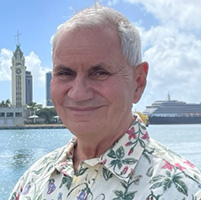
by Stas Margaronis Sep 02, 2025

The inland Port of Lyon, France, will be receiving a €40M upgrade from Marseilles-based CMA CGM to improve container-on-barge service, according to Jean-Christian Vialelles, Principal at JCV Management and President of the Propeller Club of Lyon.
The funding will go to improve container terminal operations as well as container moves to rail transport, he said.
In an interview with AJOT, Vialelles said the upcoming International Propeller Club convention taking place in Lyon from October 13-15th, 2025, will showcase the importance of container on barge commerce in partnership with the Port of Marseille. The Rhône River links the two ports.
Inland port operators and stakeholders in the United States, including those on the Mississippi River and its tributaries, will see many parallels with Port of Lyon operations.
Port of Marseilles
A keynote speaker at the International Propeller Club convention will be Christophe Castaner, Chairman of the Port of Marseille, who will discuss the importance of Marseille as a Mediterranean-based port and Lyon’s importance as an inland Marseille port partner.
The transit time between Lyon and Marseille is about 33 hours by water.
The Rhône River has been engineered with dams and locks over a total distance of 310km from its confluence with the Saône at Lyons-La Mulatière to Port-Saint-Louis-du-Rhône. From there, the Mediterranean is reached through a short canal, the Canal Maritime Saint-Louis, according to French Waterways.Com which also points out:
- The vast program of works begun by the Compagnie Nationale du Rhône (CNR) in 1933 was completed in 1980. Navigation alternates between wide deep river sections and 11 diversion canals.
- At Lyon, the Rhône is joined by the Saône, which connects it with all the waterways of central and eastern France. Upstream of the confluence the Upper Rhône has also now been partly developed by the CNR.
- The Rhone River’s power is harnessed at each dam to produce hydroelectricity; the valley also has nuclear power plants and wind farms. Navigation thus alternates between the bed of the Rhône, 300 to 500m wide, in which short steep waves may be generated by southerly winds, and 11 diversion canals, in which the locks are generally located towards the downstream end. The Mistral (northerly wind) can make lock entry difficult from upstream. The current does not exceed 7 km/h, but when combined with the effect of the Mistral, it can make progress upstream laborious for low-powered boats.
Multimodal operations
Vialelles said that his background in intermodal operations with Marseilles-based Ocean carrier CMA CGM “has provided me with the experiences and insights with which to see multi-modal operations in action at the CMA CGM container terminal operations in Marseilles.”
Vialelles said that inland water operations are the most fuel-efficient mode of transportation compared to truck and have the lowest carbon footprint, but even so 85% of Marseille terminal imports and exports go by truck rather than by barge or rail.
He is hopeful that CMA CGM’s decision to invest in stevedoring operations will bring the company’s “world-class terminal operating practices to Lyon and accelerate the transition to move more freight by inland waterway barge transport.”
French President Emmanuel Macron supported a maritime stakeholder collaboration to move more freight by barge and rail in collaboration with the CNR, acting as the regional coordinator with Lyon and nearby inland ports.
Vialelles says a big challenge has been education and understanding “the cost saving and lower carbon footprint of barge transport.”
Lyon, France’s second economic center
Vialelles said that Lyon is the second largest economic center in France and, as such, benefited from the partnership with Clasquin, a 40-year-old, mid-sized international freight forwarder and overseas logistics company. The company manages shipments both by land and sea to and from Asia-Pacific, North America, North Africa, and sub-Saharan Africa. The Lyon-based firm posted a 2023 turnover of $610.58M.
He said the company was recently acquired by Mediterranean Shipping Company (MSC). One potential area of synergy with MSC’s subsidiaries is likely to be in Africa, with Africa Global Logistics (AGL), formerly Bolloré Africa Logistics. Clasquin could offer AGL its international forwarding network for shipments to and from the continent.
Clasquin has experienced strong growth in Africa in recent years and is in the process of taking full control of its Morocco-based subsidiary, Timar, which is present in several African countries, according to a Seatrade report.
The MSC acquisition is another example of container ocean carriers expanding their role along the supply chain by snapping up freight forwarders, regional companies, and even air logistics assets.
Vialelles said that the Port of Lyon has seen the success of the Port of Rotterdam, where container terminals move import and export containers to and from inland waterway ports to ocean carriers being loaded and unloaded at Rotterdam’s Maasvlakte container terminal complex.
A key element in transitioning to barge transport remains that one barge can transport 150 TEUs (twenty-foot unit) containers and thus eliminate 75 forty-foot container truck trips.
Transitioning to container on barge transport also reduces highway congestion and the carbon emissions from trucks versus the waterway vessel.
Vialelles told AJOT these attributes have helped the Propeller Club of Lyon and Port of Lyon stakeholders mount an education campaign to move more truckloads by water and increase volumes at the Port of Lyon. The Port currently moves approximately 80,000 containers per year, he said.
Part of the education campaign has been to convince regional leaders such as the Prefect for the region, Fabienne Buccio, that expeditious customs clearances of freight at Lyon would not create slowdowns and bottlenecks: “The reality is that Customs clearances at Lyon are handled quickly and with no major delays,” Vialelles said.
Convention highlights
Vialelles said that he was inspired by the International Propeller Club Convention in Greece that took place in 2022 and was successfully managed by the Propeller Club of Piraeus. The Piraeus convention showcased the global success of Greek shipping.
The Propeller Club of Lyon hopes for a similar success at its October convention. It hopes the convention will highlight the Port of Lyon’s success in boosting maritime commerce and economic development.
Themes of the convention will include:
- Maritime transport in a new world era
- International trade and conflicts
- Diminishing the maritime transportation industry’s carbon footprint.
- Highlighting the importance of Cyber Security
- How AI streamlines transportation business operations
Stas Margaronis
Similar Stories

Anchored by safety: Port of Hueneme holds maritime security and emergency response exercise
View Article
PhilaPort ranked Nation’s Most Productive Container Port for third consecutive year
View Article
PANYNJ April volume resumes steady pace after leading the nation in March
View Article
Yale Route Runner direct-store-delivery solution recognized as one of 2026’s most innovative products
View Article
Adriatic Gate Container Terminal strengthens Far East connection with MSC’s mainline Phoenix service
View Article
Port of Antwerp-Bruges becomes the first seaport to join Pharma.Aero
View ArticleGet the most up-to-date trending news!
SubscribeIndustry updates and weekly newsletter direct to your inbox!
Follow us on social media:


