
After 2020 decline, EIA expects energy-related CO2 emissions to increase in 2021 and 2022
Jan 26, 2021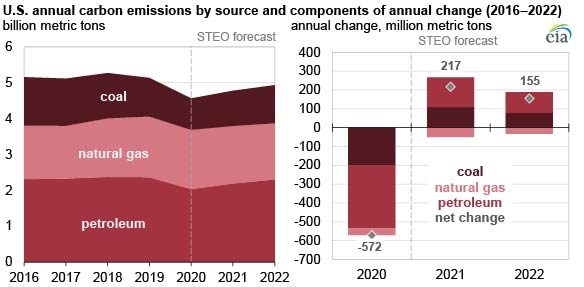
In its January 2021 Short-Term Energy Outlook (STEO), the U.S. Energy Information Administration (EIA) expects that energy-related carbon dioxide (CO2) emissions in the United States will increase in 2021. Economic growth and the lessening of pandemic-related restrictions result in more energy consumption and associated CO2 emissions. EIA expects total energy-related CO2 emissions to increase to 4.8 billion metric tons in 2021 and 4.9 billion metric tons in 2022.
U.S. energy-related CO2 emissions fell by an estimated 11% in 2020, largely because of reduced travel and other factors that have led to less energy consumption during the COVID-19 pandemic. In the short term, EIA forecasts rising CO2 emissions as a result of economic recovery from the COVID-19 pandemic, changes in fuel mix, and greater demand for residential electricity as colder winter weather leads to more heating demand in 2021.
EIA expects petroleum to account for about 46% of total U.S. energy-related CO2 emissions in 2021 and 47% of total energy-related CO2 emissions in 2022. Most of these emissions come from the transportation sector as a result of increased travel as the economy recovers from the effects of the COVID-19 pandemic.
EIA expects natural gas, which accounted for about 36% of total energy-related CO2 emissions in 2020, to decline to about 34% of total emissions in 2021. Emissions from natural gas are declining mainly because natural gas consumption is declining as natural gas prices increase relative to coal prices. EIA expects natural gas prices to increase by 98 cents per million British thermal units (MMBtu) in 2021 while prices for coal increase by 12 cents/MMBtu. As a result, EIA forecasts that natural gas’s share of total energy-related CO2 emissions will decline to 32% in 2022 as natural gas prices rise.
Coal accounted for 19% of total U.S. energy-related CO2 emissions in 2020. EIA expects this share of total emissions to rise to 21% in 2021 and 2022 as coal becomes more economical for use in electricity generation amid higher natural gas prices.
Similar Stories

U.S. airlines’ May 2026 aviation fuel cost up 3.0%, consumption up 3.5%, and fuel cost per gallon down 0.5% from April 2026
View Article
Clean energy on the front line at Heathrow Animal Reception Centre
View Article
Offshore operations: Why small improvements no longer cut it?
View Article
OOCL Wisdom completes first green methanol bunkering and commences maiden voyage at Qingdao Port
View Article
bound4blue eases eSAIL® adoption with ABS review of Pwind calculation methodology
View Article
A mobile green hydrogen refueling station enables the immediate deployment of a hydrogen bus fleet in Northern Germany
View ArticleGet the most up-to-date trending news!
SubscribeIndustry updates and weekly newsletter direct to your inbox!
Follow us on social media:


